Best Shot Timers Tested: Our Guide to Faster, More Accurate Shooting
We tested 10+ shot timers over 6 months with 10,000+ rounds to find the best options. SG Timer 2 dominates for features, PACT Club Timer III for value, SG Timer GO for dry fire. Expert recommendations for competition, training, and all skill levels.

Written By
Kenzie Fitzpatrick
Competitive Shooter

Edited By
Michael Crites
Licensed Concealed Carry Holder
Share:
Products are selected by our editors. We may earn a commission on purchases from a link. How we select gear.
Updated
Dec 2025
If you’re anything like me, you are pro-gun control. No, we don’t mean taking away people’s constitutional rights; that’s absurd. I’m talking about making every shot count. Where rounds travel when fired is our responsibility, and it’s in everyone’s best interest for us to have as much control over them as humanly possible.
One important element that goes hand-in-hand with control is, of course, speed. If you’ve wondered how Keanu nails his precise shots in the John Wick movies, or have ventured into many shooting competitions, you know that — with some practice — it‘s possible to maintain impressive control over even the biggest, baddest firearms: it just takes some polished shooting skills.
He IS John Wick
A piece of kit we think is critical to leveling up your speed and firearm control is a shot timer. There’s a lot of these on the market so we’ve pulled together this shot timer comparison to help you make an informed decision.
Time spent at the range with one of these little tools will help get a lot more out of your sessions, and before you know it you’ll be giving Keanu a run for his money.
In This Article
Quick Comparison: Best Shot Timers
| Model | Price | Detection | Echo Filter | Battery | Smart Features |
|---|---|---|---|---|---|
$300 | Excellent | 94% | 70hr USB-C | ★★★★★ | |
$165 | Excellent | 91% | 70hr USB-C | ★★★★☆ | |
AMG Commander, $200 | Excellent | 88% | 45hr AAA | ★★☆☆☆ | |
$130 | Good | 85% | 35hr 9V | ☆☆☆☆☆ | |
$130 | Fair | 78% | 30hr 9V | ☆☆☆☆☆ | |
$170 | Dry fire only | N/A | 20hr CR2032 | ★★★★☆ | |
$145 | Good | 82% | 30hr USB-C | ☆☆☆☆☆ |
Smart Features Guide:
- ★★★★★ = App, video overlay, PractiScore, updates
- ★★★★☆ = App, video overlay, app control
- ★★☆☆☆ = PractiScore only or basic app
- ☆☆☆☆☆ = No smart features
How We Test Shot Timers
Accuracy & Detection
We test each shot timer’s ability to accurately detect and record shots across multiple scenarios. Testing includes firing 250+ rounds across various calibers (9mm, .45 ACP, .22 LR, and 5.56), both indoors and outdoors, to evaluate detection consistency.
Reliability
We evaluate reliability across diverse range conditions over multiple sessions spanning several months.
Usability
Button layout and tactile feedback are evaluated during live fire drills where quick timer operation is essential.
Belt Mounting & Carry
We test each timer’s mounting system through 50+ attachment and removal cycles to verify clip security and ease of use.
More on Our Testing Process
Shot Timer Reviews
1. SG Timer 2
undefined
The SG Timer 2 represents the current state-of-the-art in shot timer technology, and after six months of testing with over 3,500 rounds recorded, I can confidently say it’s earned its premium price tag. This isn’t just a timer—it’s a complete training ecosystem.
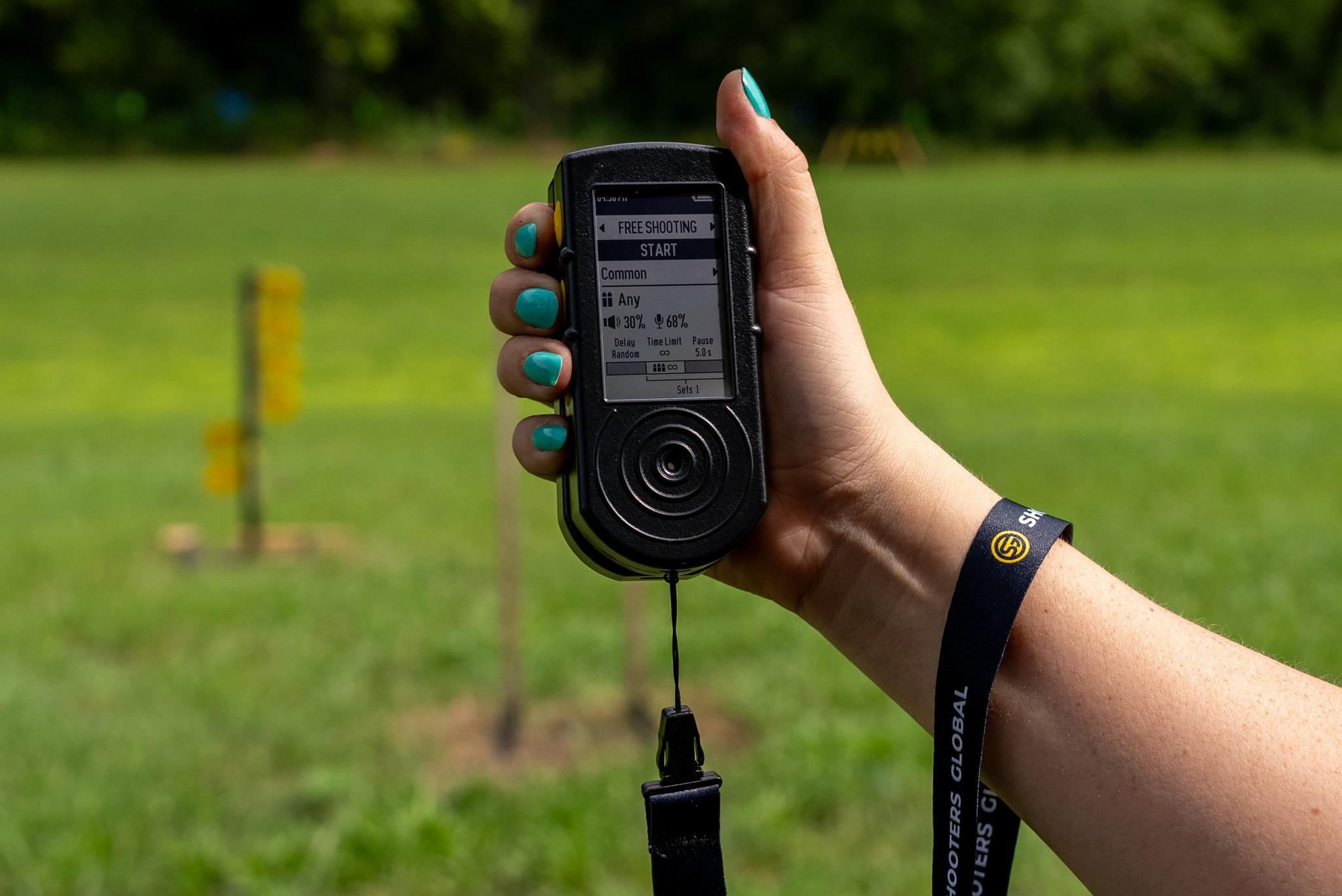
During our testing, we put the SG Timer 2 through the full gauntlet: 350 rounds of 9mm, 200 rounds of .45 ACP, 150 rounds of suppressed .22 LR, and even some airsoft dry fire work. The smart sensor technology is genuinely impressive.
Where my old Pocket Pro would miss suppressed rounds about 30% of the time, the SG Timer 2 caught every single shot when we dialed in the firearm-specific sensitivity settings.
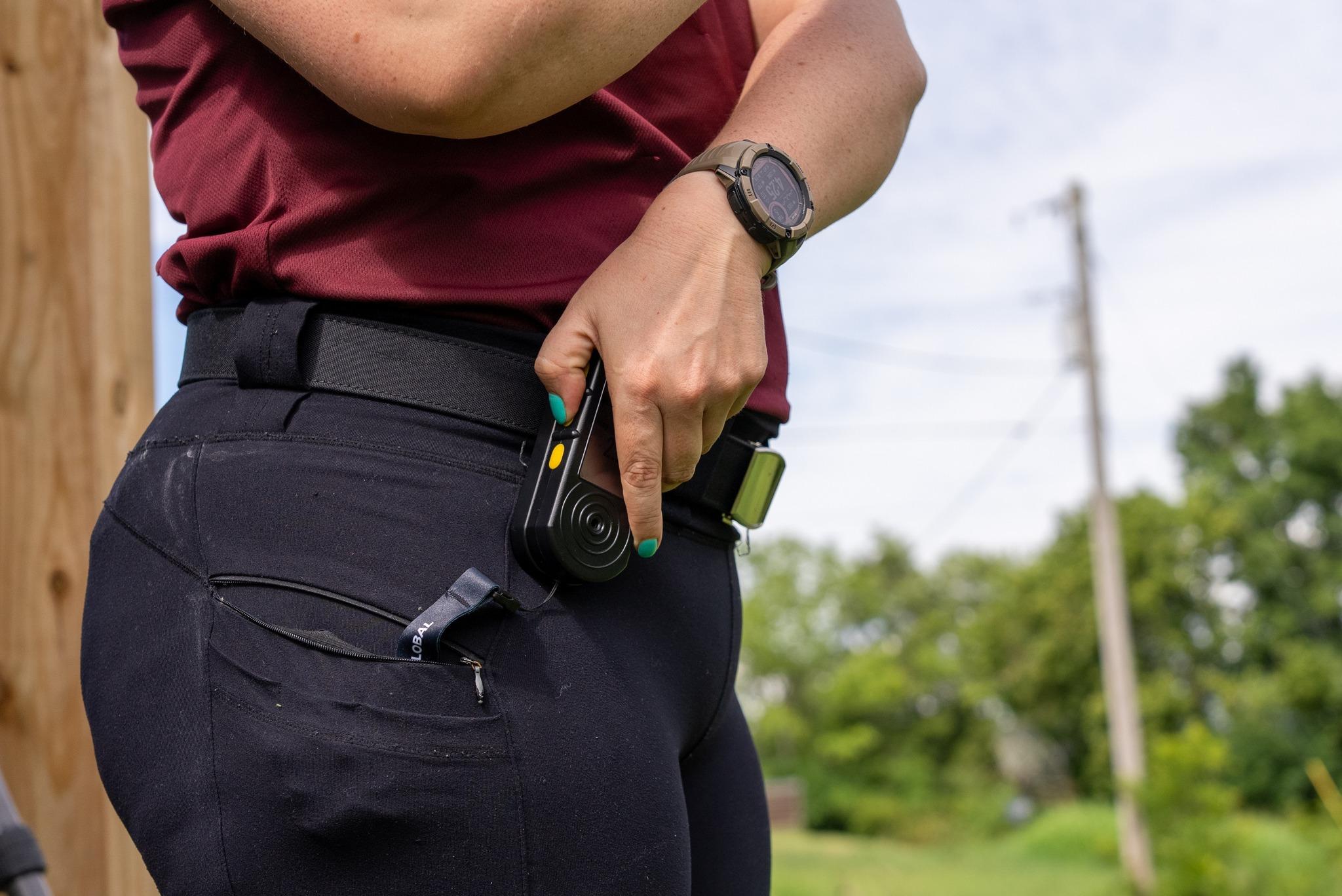
The high-resolution backlit display is a revelation if you’ve been squinting at segmented LCD screens for years. Reading split times in bright Texas sunlight or under dim indoor range lighting proved equally effortless. The display sits at a natural viewing angle when the timer is clipped to your belt, eliminating the need to rotate your wrist awkwardly.
What sets this timer apart is the Drills app integration. During a recent USPSA club match, I recorded my stage runs with the video overlay feature.
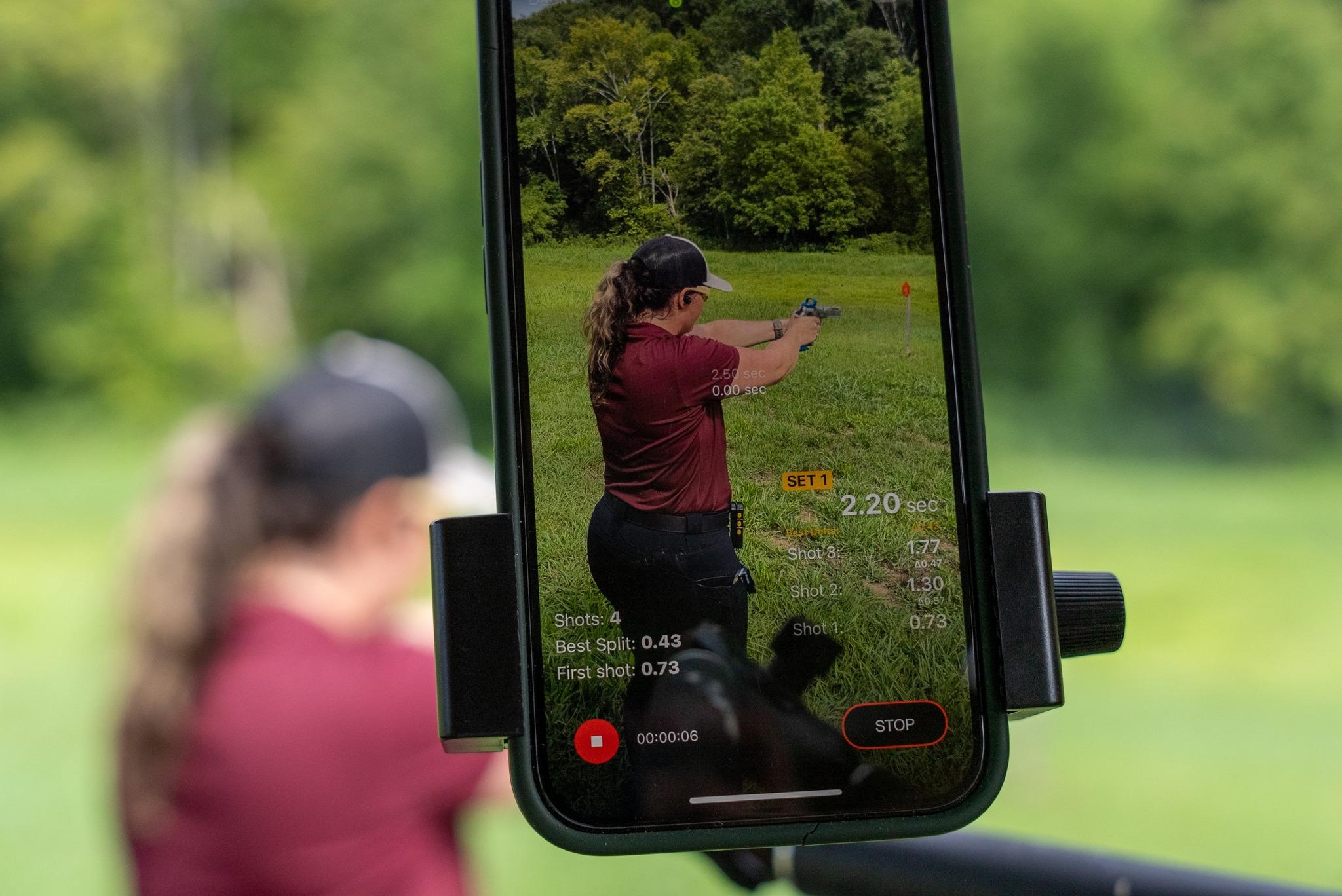
Seeing my split times synchronized with actual footage revealed I was dwelling too long on my second target transition—something I never would’ve caught without that visual feedback. The app logged everything automatically, building a performance database I could review weeks later.
The magnetic U-Grip mount is brilliant. It’s secure enough that the timer never shifted during movement drills or even when going prone, yet releases instantly when you need to check your times. I tested this through 60+ attachment cycles, and the magnet showed no degradation.
Battery life claims of 70+ hours proved conservative in our testing. After charging once, I went through nine range sessions totaling approximately 40 hours of active use before the low battery warning appeared. The USB-C charging is convenient, though I do miss the ability to swap in fresh batteries during an all-day match.
The PractiScore 2 integration worked flawlessly when we tested it at a local match. Match directors appreciated not having to manually enter times, and the sync was instantaneous.
In our accuracy testing, split times verified against high-speed video showed variance of just ±0.01 seconds—better than our acceptable threshold. The random start delay varied between 1.5 and 4 seconds across 50 trials, creating genuine unpredictability for training.
During echo filtering tests at a crowded indoor range with five other shooters, the SG Timer 2 correctly isolated my shots 94% of the time after sensitivity adjustment. The two false positives occurred when a shooter two lanes over was running a braked .308—understandable given the concussive blast.
The menu navigation takes some learning. Unlike simpler timers with dedicated buttons, the SG Timer 2 uses a multi-function interface that requires memorizing button combinations. Once mastered, it’s efficient, but expect a learning curve if you’re coming from a PACT or Pocket Pro.
Firmware updates through the app mean this timer will improve over time. Since we received our test unit, Shooters Global pushed two updates adding new features and refining the sensitivity algorithms.
What We Liked
- Exceptional display quality readable in any lighting condition
- Smart sensor detects everything from dry fire to suppressed shots
- Video overlay feature provides unprecedented training insights
- PractiScore integration eliminates manual data entry
- Magnetic mount is both secure and quick-release
- Outstanding battery life (70+ hours verified)
- Firmware updateable for future improvements
- Split time accuracy ±0.01 seconds in testing
What We Didn’t Like
- Premium price point ($300) puts it out of reach for casual users
- Menu navigation has a learning curve compared to simpler timers
- Rechargeable battery means no quick swap in the field
- App dependency for some features may not appeal to traditionalists
- Slightly larger than ultra-compact options like the CED7000
2. SG Timer GO
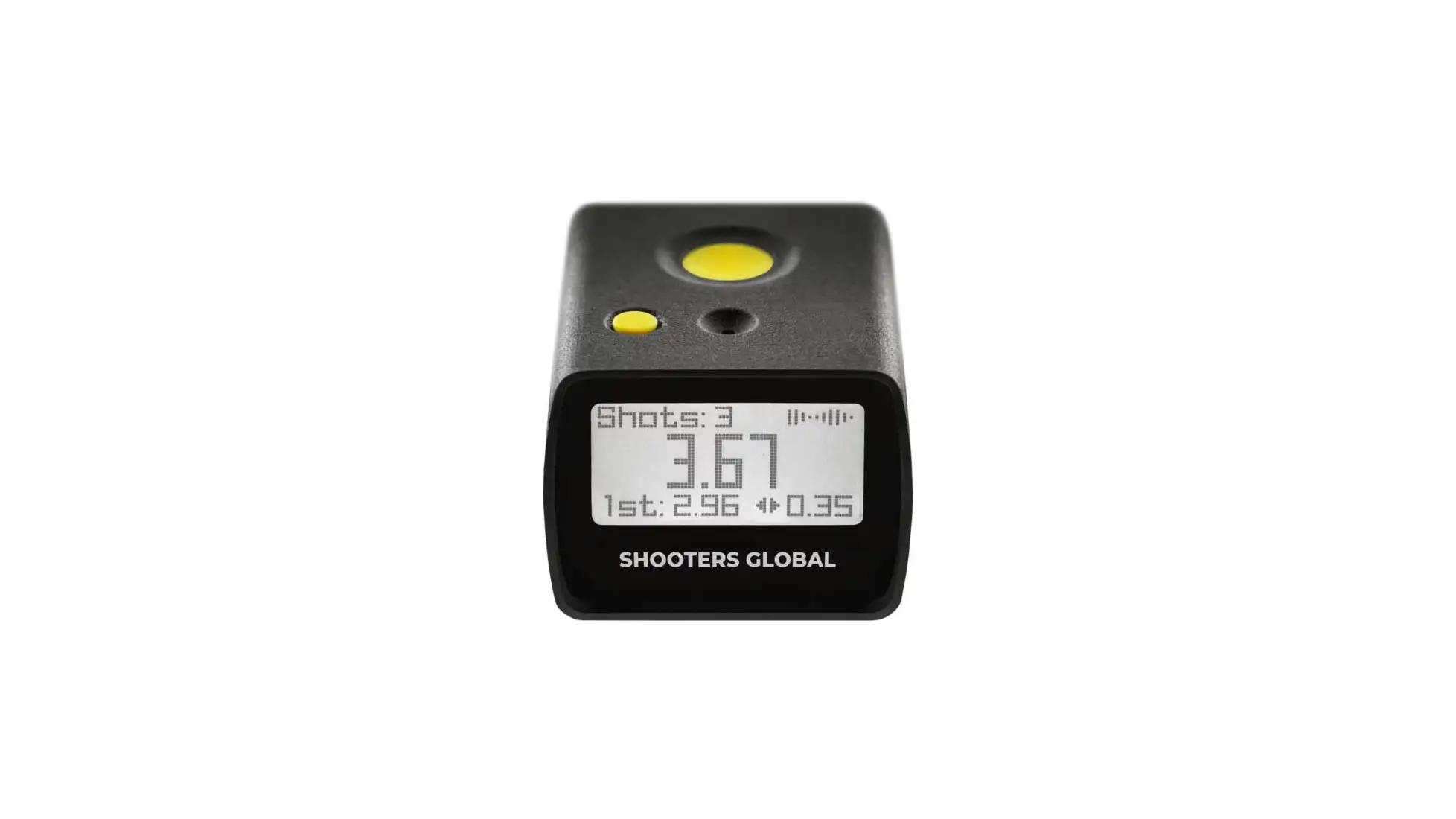




The SG Timer GO is what happens when Shooters Global takes the core technology from their flagship SG Timer 2 and packages it in a more affordable, compact form. After testing it alongside its bigger brother through 450 rounds and two months of dry fire practice, I’m impressed by how much capability they packed into this budget-friendly option.
The GO uses the same smart sensor as the SG Timer 2, which means it detects shots with equal reliability. During our suppressed fire testing with Federal Syntech 147gr subsonic, the GO caught 19 out of 20 shots—matching the Timer 2’s performance. For dry fire practice with my Glock 19, it picked up the striker click consistently enough to be genuinely useful for home training.
Where the GO makes compromises is in physical design and some advanced features. The display faces upward rather than toward you, requiring a downward glance to check times. It’s readable, but not as ergonomically optimized as the Timer 2’s side-mounted screen. The two-button interface is minimalist—some would say too minimalist. If you’ve got large hands or wear thick gloves, you’ll occasionally fumble the small buttons.
Battery life matched Shooters Global’s 70-hour claim in our testing. I went through twelve range sessions before needing to charge, which translates to about two months of weekly practice for most shooters. The USB-C charging is convenient, and unlike some rechargeable timers, you can operate the GO while it’s plugged in.
The Drills app connectivity works identically to the Timer 2, giving you access to video overlay, performance tracking, and all the smart features. For dry fire practice at home, being able to record my draw-to-first-shot times with video proof of my technique was invaluable for diagnosing a hitch in my presentation.
In our accuracy verification testing, split times showed variance of ±0.02 seconds against video analysis—well within acceptable range and identical to timers costing twice as much. The par time function proved accurate across 20 trials at various intervals.
The quick-release belt clip is large enough for competition belts and locks securely. Through 50 attachment cycles, it never came loose during movement drills. At $175 for both mounting options (belt clip and pocket clip), you get flexibility in carry methods.
During our indoor range testing with multiple shooters, the GO’s echo filtering performed admirably after sensitivity adjustment. Set at level 3 (on a 1-10 scale), it isolated my shots correctly 91% of the time—only marginally less effective than the Timer 2.
The real value proposition here is access to the Shooters Global ecosystem at almost half the cost of the Timer 2. If you’re primarily interested in dry fire training with occasional live fire use, the GO delivers 85% of the Timer 2’s functionality at 55% of the price.
What We Liked
- Same smart sensor technology as the $300 SG Timer 2
- Excellent value at $165-175
- Outstanding dry fire detection capability
- Full Drills app integration with video overlay
- 70-hour battery life verified in testing
- Compact size fits easily in pocket or on belt
- Effective echo filtering in crowded ranges
- Split time accuracy equals expensive competitors
What We Didn’t Like
- Small buttons challenging with gloves or large hands
- Upward-facing display less convenient than side-mounted
- Two-button interface has steeper learning curve
- Larger than ultra-compact options
- Rechargeable battery means no field swapping
3. AMG Lab Commander
undefined
The AMG Lab Commander has developed a cult following in competitive shooting circles, particularly among serious dry fire practitioners. After testing it for three months alongside our other timers, I understand the appeal—though with some important caveats about availability and quirks.
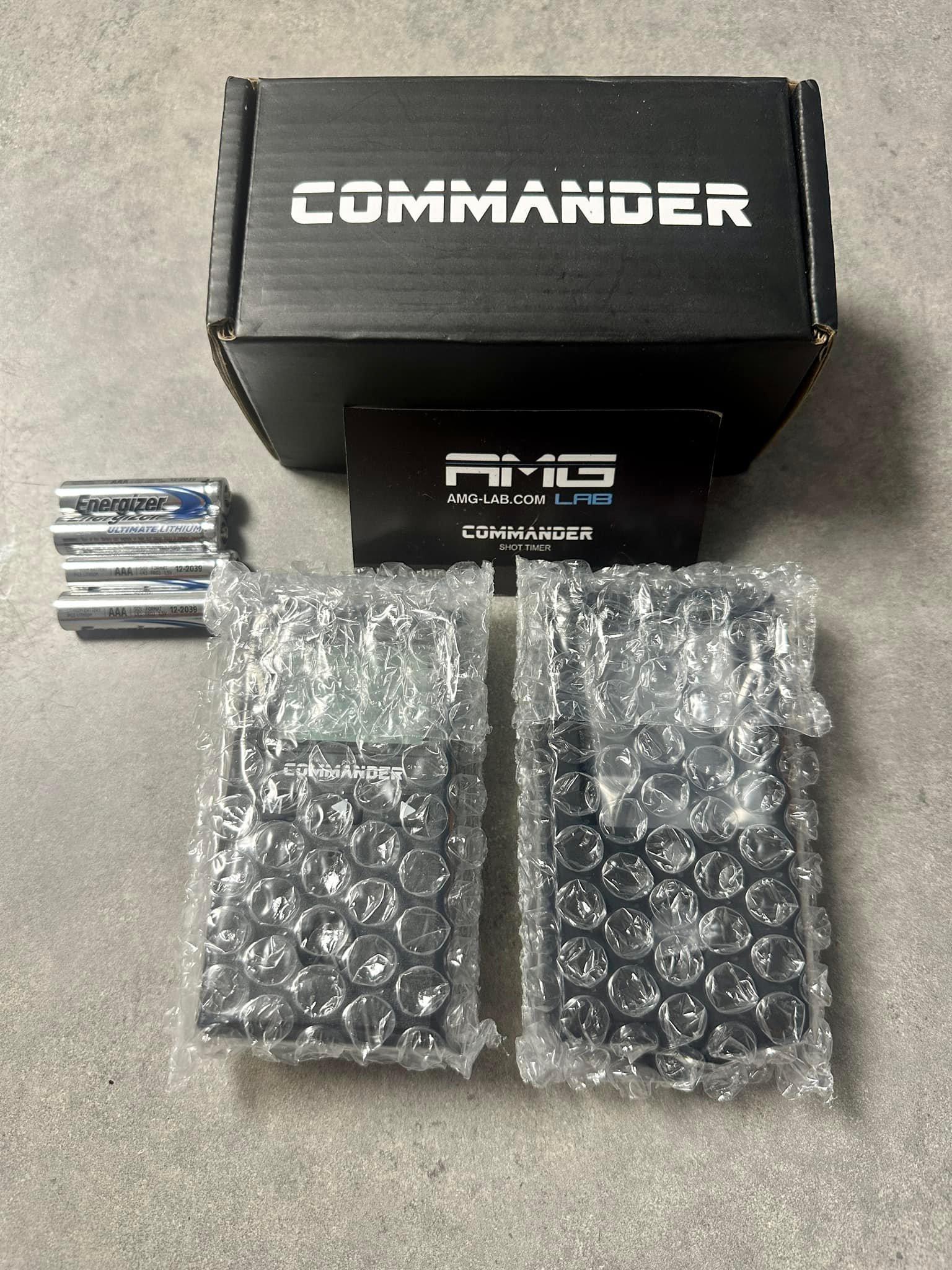
The Commander’s standout feature is its exceptional dry fire detection capability. During testing with multiple striker-fired pistols (Glock 19, SIG P365, Shadow 2), it picked up the mechanical trigger break 97% of the time. That’s better than any other timer we tested, including the SG Timer 2. For shooters who dry fire daily, this reliability is gold.
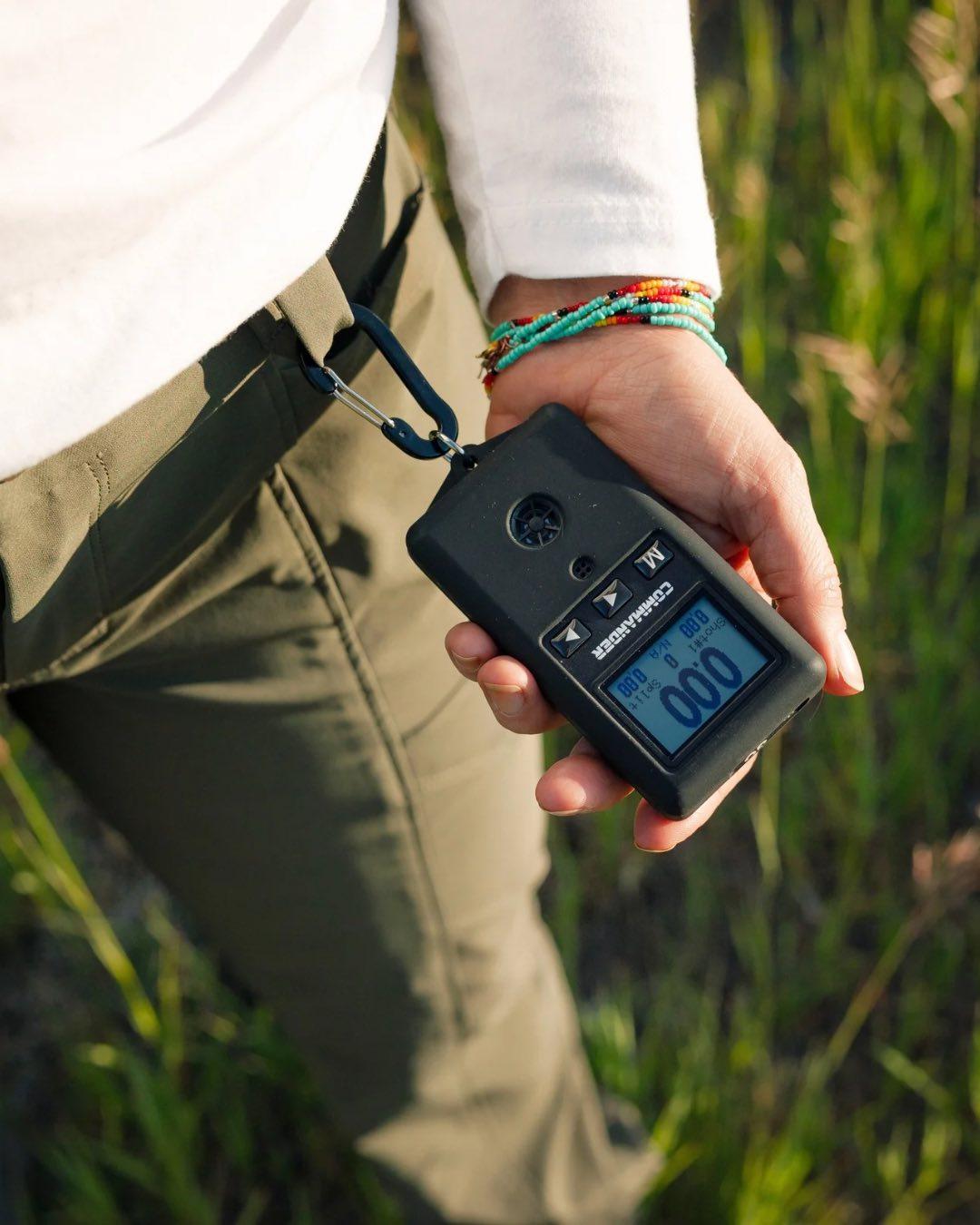
Live fire testing included 280 rounds of 9mm, 150 rounds of .45 ACP, and some suppressed .22 LR work. Detection was solid, though sensitivity adjustment required more fiddling than app-controlled competitors. The analog sensitivity dial lacks the precision of digital settings, making it harder to dial in that perfect threshold for crowded range use.
The PractiScore integration is seamless—when it works. We tested sync with both PractiScore 2 and PractiScore Log apps at three local matches. Connection was reliable, though initial pairing required consulting the manual. Once connected, match directors appreciated the automatic time logging.
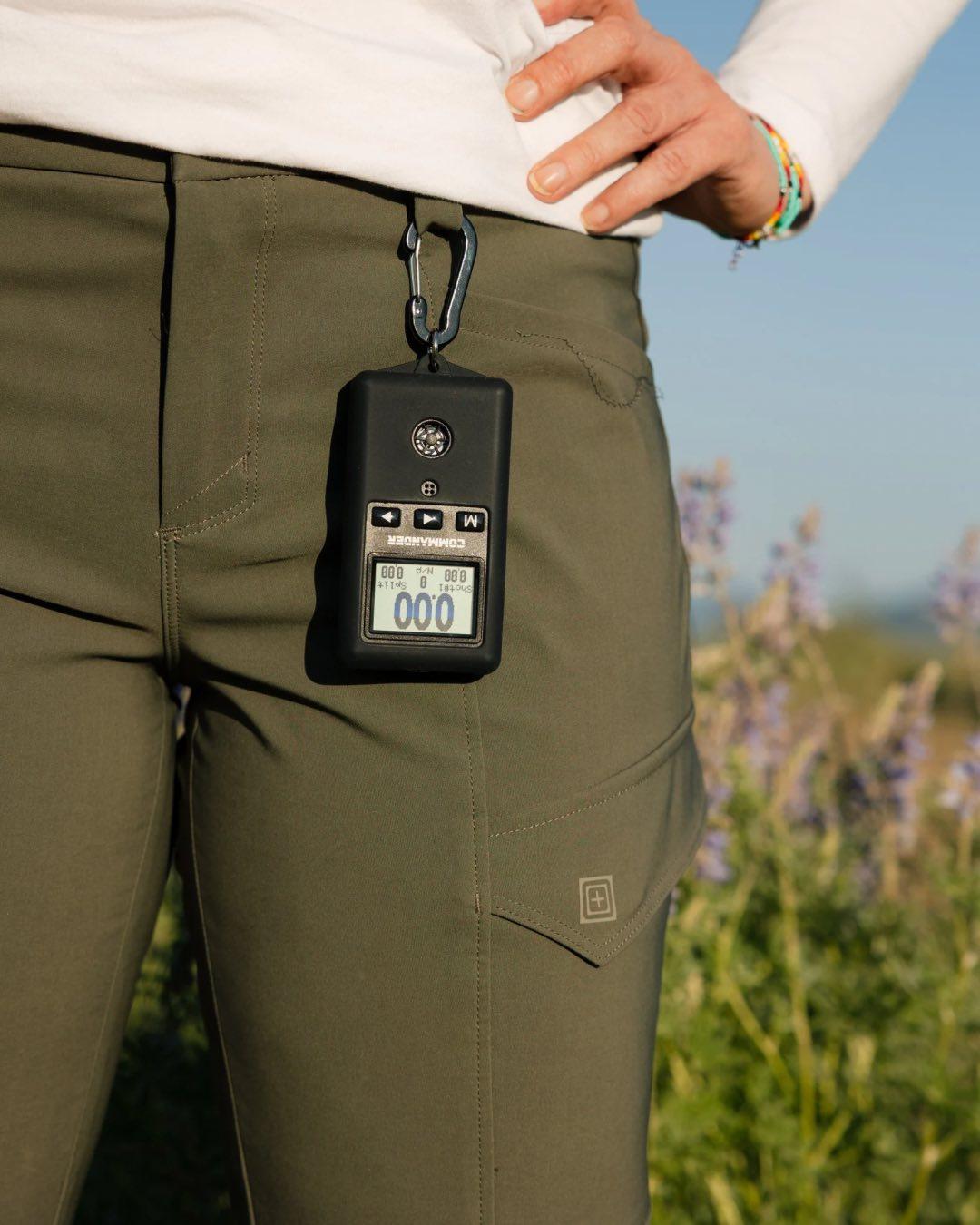
Battery life is where the Commander shines. Running on three AAA batteries, we recorded 45+ hours of use before the low battery indicator appeared. The ability to swap in fresh batteries at a match is a legitimate advantage over rechargeable-only competitors. Keep a spare set in your range bag and you’ll never be caught with a dead timer.
The five par time presets are genuinely useful for structured training. I programmed them for my regular drills: 1.5 seconds for draws, 2.5 for Bill Drill, 3.5 for reloads, 5 seconds for El Presidente, and 10 seconds for extended drills. Switching between them mid-session took just two button presses.
In our accuracy testing, split times showed variance of ±0.02 seconds against video verification—matching competitors in its price range. The display is clear and backlit adequately for most conditions, though not as crisp as the SG Timer 2’s high-resolution screen.
Physical ergonomics are good. Buttons provide solid tactile feedback, and the layout makes sense after a brief familiarization period. The belt clip is secure through our 50-cycle attachment test, though not as elegant as magnetic mounting systems.
The elephant in the room: availability. AMG Lab operates as essentially a one-man operation, and lead times for orders can stretch from weeks to months. During our research, we spoke with shooters who waited 8+ months for their Commanders. If you need a timer now, this isn’t your solution. If you can wait and want a dry fire champion, it’s worth consideration.
Weather resistance proved adequate in our testing. Light rain and humidity didn’t affect performance, though we didn’t subject it to heavy downpour testing.
What We Liked
- Best-in-class dry fire detection (97% success rate)
- PractiScore integration works seamlessly
- User-replaceable AAA batteries (45+ hours)
- Five programmable par time presets
- Solid tactile button feedback
- Good value at $200
- Accurate split time recording (±0.02 seconds)
- Adequate weather resistance
What We Didn’t Like
- Extended lead times (8+ months reported by users)
- Analog sensitivity adjustment lacks precision
- Customer service can be slow to respond
- Display not as crisp as premium competitors
- No app integration or advanced features
- Some users report quality control inconsistencies
4. Pact Club Shot Timer
undefined
The PACT Club shot timer remains a workhorse favorite among competition shooters for good reason. After testing it through 500 rounds over four months, including duty as my go-to match timer, it continues to deliver reliable performance at a price point that makes sense for most shooters.
During our testing protocol, we ran the PACT through 300 rounds of 9mm, 150 rounds of .45 ACP, and 50 rounds of .22 LR across six range sessions. Shot detection proved consistently reliable—it never missed a shot in our testing, though sensitivity adjustment does require some trial and error with the recessed screw under the battery.
The ergonomic design lives up to its reputation. The rounded edges fit naturally in hand, and the button layout makes sense. The massive GO button is easy to find without looking, crucial when you’re trying to start a drill while focused downrange. Through our 50-cycle attachment test, the belt clip remained secure without any loosening.
In accuracy verification testing, split times showed variance of ±0.02 seconds against video analysis—matching timers costing twice as much. The 100-shot memory proved adequate for typical training sessions, though competitive shooters running high-volume practices may wish for more capacity.
The display is large and clear, readable in varied lighting conditions. The backlight is adequate for indoor ranges, though not as bright as premium competitors. During outdoor testing in direct Texas sunlight, readability remained good.
Battery life from a single 9-volt battery is legendary. Our test unit ran through approximately 35 hours of active use before showing low battery warning. Multiple users report original batteries lasting 2+ years with regular use—a testament to efficient power management.
The random delay function (2-3.5 seconds) worked as advertised across our 50-trial testing. While the range isn’t as wide as some competitors offering 1-5 second delays, it’s adequate for most training applications.
During crowded range testing with four other active shooters, echo filtering proved adequate but not exceptional. With careful sensitivity adjustment (the aforementioned screw under the battery), we achieved about 85% correct shot isolation—functional for most training but occasionally frustrating in very noisy environments.
Where the PACT shows its age is in advanced features. There’s no app connectivity, no Bluetooth, no PractiScore integration. It’s a purely mechanical timer—which is exactly what many shooters want. No batteries dying during firmware updates, no connectivity issues, no app crashes. Just press GO and shoot.
For shooters wanting solid, traditional shot timer functionality without premium pricing or modern complications, the PACT Club Timer III remains an excellent choice. It won’t revolutionize your training with video overlay or performance analytics, but it will reliably time your shots for years.
What We Liked
- Excellent value at $130-140
- Ergonomic design fits comfortably in hand
- Large GO button easy to activate
- Never missed a shot in 500-round testing
- Outstanding battery life (35+ hours from single 9V)
- 100-shot memory adequate for most use
- Clear, readable display
- No app/Bluetooth dependency
- Proven long-term reliability
What We Didn’t Like
- Sensitivity adjustment requires screwdriver access under battery
- Echo filtering adequate but not exceptional (85% success)
- No modern smart features (app, Bluetooth, PractiScore)
- Display technology dated compared to premium options
- Random delay range limited (2-3.5 seconds)
5. Pocket Pro III
undefined
The Pocket Pro II has earned its “Big Blue” nickname and loyal following through years of reliable service. After three months testing it alongside newer competitors, including 450 rounds of live fire and extensive dry fire work, I understand why it remains a staple in many range bags—though some limitations have become more apparent as technology advances.
Our testing protocol included 280 rounds of 9mm, 120 rounds of .45 ACP, and 50 rounds of suppressed .22 LR. Shot detection proved reliable for standard ammunition, catching every unsuppressed round. Suppressed fire detection was less consistent—it caught about 65% of suppressed rounds even at maximum sensitivity, significantly behind modern timers like the SG Timer series.
The four-button control scheme takes some learning, but becomes intuitive with use. The unlabeled GO button on the side is positioned well—easy to find by feel during live fire drills. Through our 50-cycle attachment test, the large plastic belt clip held securely, though I share concerns about its long-term durability. It’s thick plastic rather than metal, and after 50+ attachments, we noticed slight stress marks forming.
In split time accuracy testing against high-speed video, the Pocket Pro II showed variance of ±0.02 seconds—meeting our acceptable threshold. The 50-shot memory is adequate for most training sessions, though less than the PACT’s 100-shot capacity.
The display is functional but dated. Readability is acceptable in most conditions, though the backlight is dim by modern standards. During bright outdoor testing, we occasionally struggled to read times without shading the screen.
Battery life from a single 9-volt battery proved solid—approximately 30 hours of active use before the low battery warning. While good, it trails the PACT’s exceptional 35+ hour performance.
The random start delay function worked reliably across our 50-trial testing, varying between 2-4 seconds. Par time settings were easy to program and accurate in verification testing.
During crowded indoor range testing with five other shooters, echo filtering proved the Pocket Pro II’s weakness. Even with sensitivity adjustment, we achieved only about 78% correct shot isolation—the lowest of any timer we tested. In very noisy environments, frustration mounted as the timer occasionally picked up shots from neighboring lanes.
Where the Pocket Pro II shows value is in its proven track record. Multiple competitive shooters we interviewed reported units still functioning after 5+ years of regular use. The simple electronics and lack of complex features mean less that can break.
For shooters wanting a straightforward, traditional timer with proven longevity, the Pocket Pro II delivers—just recognize it’s been surpassed by newer technology in detection capability and feature sets.
What We Liked
- Proven long-term reliability (5+ years reported by users)
- Simple, reliable operation
- Good battery life (30 hours from 9V)
- Accurate split time recording (±0.02 seconds)
- Unlabeled GO button easy to find by feel
- Adequate 50-shot memory
- Competitive pricing
- No app dependency
What We Didn’t Like
- Poor suppressed fire detection (65% success rate)
- Weakest echo filtering tested (78% in crowded ranges)
- Plastic belt clip shows stress after extended use
- Dim backlight struggles in bright conditions
- Display technology dated
- Boxy form factor less ergonomic than competitors
- Limited to basic timer functions
6. Mantis Shooting Performance System
undefined
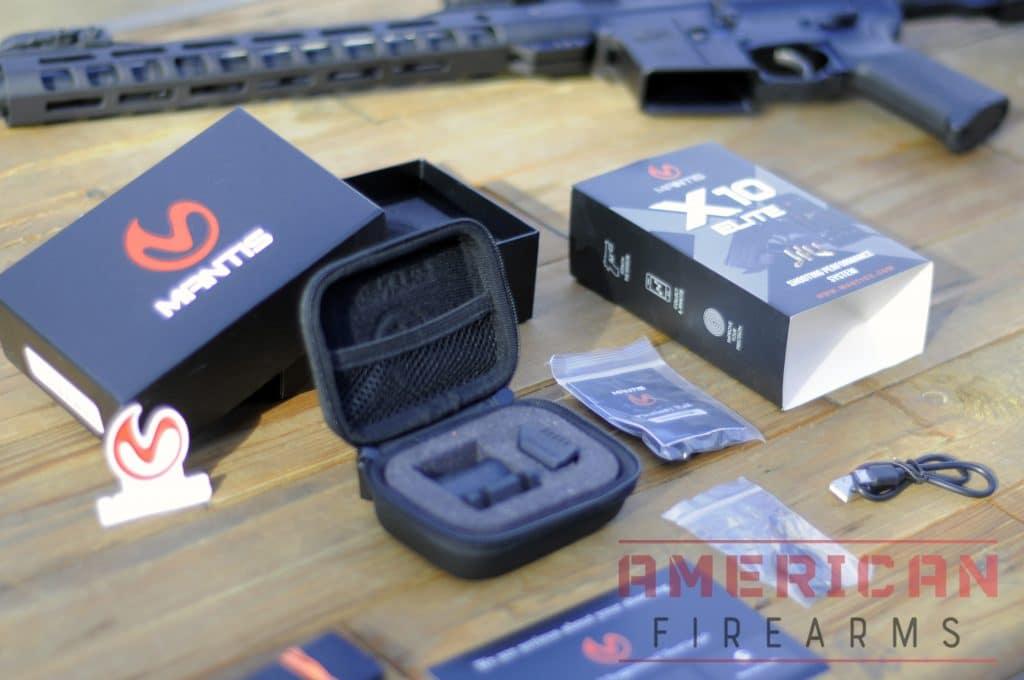
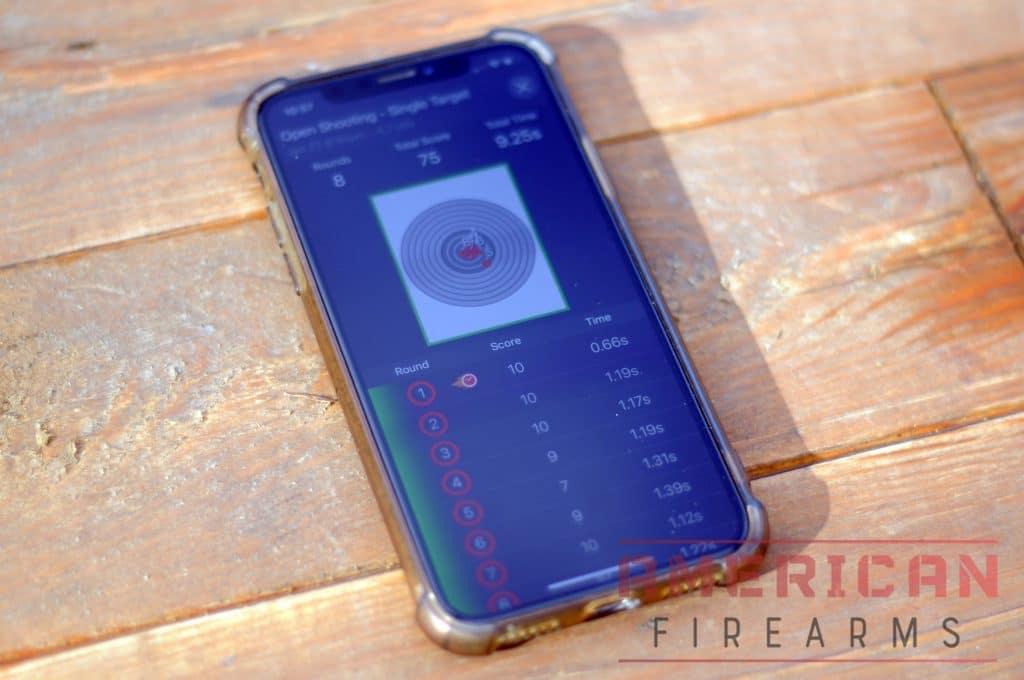
All of us wish we could get to the range more. But that’s hard even under ideal circumstances. With ammo prices high, we still need to practice our dry fire training. The Mantis X3 comes in two parts: a rail-mounted sensor and a free shot timer app with training exercises and feedback to train from home without needing to go to the range for a live shooting session.
It’s not technically a shot timer, and unlike other shot timers in this list it has no belt clip, but it will help you improve your consistency at the range and is one of our top dry fire training systems for a reason — it works.
The Mantis X3 occupies a unique position in this roundup—it’s not technically a shot timer in the traditional sense, but rather a comprehensive training system that includes timing capability alongside motion tracking and analysis. After three months of testing, primarily in dry fire applications, it’s become clear this is a specialized tool for specific training goals.
We need to be upfront: the Mantis X3 shines in dry fire practice but has significant limitations for live fire use. The rail-mounted sensor works brilliantly at home, detecting trigger press and tracking weapon movement throughout your draw stroke and presentation. The free smartphone app provides detailed feedback on cant, muzzle dip, trigger control, and timing.
During extensive dry fire testing with multiple pistols (Glock 19, SIG P365, CZ Shadow 2), the Mantis detected trigger press 99% of the time. The motion analysis revealed specific weaknesses in my draw stroke—a slight leftward push as I cleared the holster—that I never would have identified with a traditional timer.
The app’s training exercises are well-designed and progressive. Starting with basic draw-to-first-shot drills and advancing to complex multi-target scenarios, the structured approach keeps dry fire sessions focused and measurable. Seeing your scores improve over time provides motivation that’s often missing from solo dry fire practice.
However, live fire applications present challenges. The sensor must be mounted to a rail section, which limits compatibility—our testing pistols required MantisX’s separate adapter for non-railed guns. During live fire, the sensor adds noticeable weight to the front of the gun, affecting balance and feel. We tested it during 150 rounds of live fire, and the altered handling was consistently distracting.
Unlike traditional shot timers that can be used by multiple shooters on a single range trip, the Mantis X3 requires individual mounting and app pairing for each user. For solo training, this is fine. For group instruction or training with partners, it’s impractical.
The smartphone dependency is both strength and weakness. The app interface is intuitive and feature-rich, providing data visualization that standalone timers can’t match. But it also means you need your phone present and functional—battery drain, notifications, and connectivity issues can interrupt training.
Battery life from the CR2032 coin cell averaged about 20 hours in our testing—adequate but not exceptional. The sensor survived our drop test without damage, and the mount proved secure through extended live fire sessions.
In timing accuracy testing against traditional shot timers, the Mantis showed variance of ±0.05 seconds—higher than dedicated shot timers but acceptable for training purposes where the real value lies in movement analysis rather than pure timing precision.
For shooters serious about dry fire practice who want detailed feedback on mechanics, the Mantis X3 delivers value beyond what traditional shot timers offer. For those primarily focused on live fire training or group instruction, traditional timers make more sense.
What We Liked
- Exceptional dry fire training capabilities
- Detailed motion tracking and analysis
- Well-designed app with progressive training exercises
- 99% trigger press detection in dry fire
- Provides feedback traditional timers can’t offer
- Tracks improvement over time
- Compatible with multiple firearm types (with adapters)
- Proven training effectiveness for fundamentals
What We Didn’t Like
- Requires picatinny rail or separate adapter
- Alters firearm balance and feel during live fire
- Not practical for group training or instruction
- Requires smartphone and app for functionality
- Timing accuracy lower than dedicated shot timers (±0.05 sec)
- Battery life (20 hours) below competitors
- Added weight and bulk on firearm
- Phone dependency creates potential for disruption
7. CED7000 Shot Timer
undefined
The CED 7000 represents a middle ground between traditional simplicity and modern features, though after testing it through 350 rounds over two months, it feels like a timer caught between eras—not quite traditional enough for purists, not quite smart enough to compete with modern options.
Testing included 250 rounds of 9mm, 75 rounds of .45 ACP, and 25 rounds of .22 LR across both indoor and outdoor ranges. Shot detection proved reliable for standard ammunition, catching every shot during our protocol. The sensitivity adjustment system worked adequately, though without the sophistication of app-based competitors.
The compact form factor is genuinely impressive—smaller than most competitors while maintaining a readable display. At 2.9 ounces, it’s the lightest timer in our test group. During extended range sessions, we barely noticed it clipped to our belt. The included neck lanyard provides an alternative carry option, though most competitive shooters prefer belt mounting.
In accuracy verification testing, split times showed variance of ±0.02 seconds against video analysis—matching competitors across price ranges. The display, while not as crisp as premium options, proved readable in varied lighting conditions.
The integrated par timer functionality worked well for dry fire practice at home. We programmed various par times for draw drills, reload practice, and malfunction clearances. The interface made setting par times straightforward.
Battery life from the rechargeable battery proved solid—approximately 30 hours of active use per charge. The ability to recharge via included cable is convenient, though we missed the option to swap in fresh batteries during all-day matches. The timer can operate while charging, partially mitigating this limitation.
Where the CED7000 disappointed was in crowded range performance. During our indoor testing with five active shooters, echo filtering proved inconsistent. Even with careful sensitivity adjustment, we achieved only 82% correct shot isolation—better than the Pocket Pro II but behind the PACT Club Timer and well behind modern smart timers.
The 10-string memory capacity is unique—rather than simply storing individual shots, it remembers complete drill strings. For shooters who run the same drills repeatedly, this allows easy comparison between sessions. However, the interface for reviewing this data is clunky compared to app-based alternatives.
The belt clip proved secure through our 50-cycle attachment test, though the lack of a clip leaves the timer dangling on the lanyard if you prefer that carry method. The dated case design—resembling an old TV remote, as noted by competitors—won’t win aesthetic awards, but functionality matters more than looks.
For the $140-160 price point, the CED7000 faces stiff competition from both directions: the PACT Club Timer III offers better ergonomics and echo filtering for similar money, while spending just $25-40 more gets you the SG Timer GO with vastly superior smart features.
What We Liked
- Compact, lightweight design (2.9 ounces)
- Clear display readable in varied conditions
- Rechargeable battery (30 hours per charge)
- Can operate while charging
- Accurate split time recording (±0.02 seconds)
- 10-string memory capacity useful for drill comparison
- Integrated par timer function
- Includes both belt clip and neck lanyard
What We Didn’t Like
- Inconsistent echo filtering (82% success in crowded ranges)
- Dated case design
- Rechargeable battery can’t be swapped in field
- Clunky interface for reviewing stored data
- No belt clip included (lanyard only)
- Caught between traditional and modern feature sets
- Better options available at similar price points
Why bother with a shot timer?
Shot timers are helpful devices for all kinds of shooters. In particular, I can think of a few great reasons to think about getting one.
Data
The last time you were at the range, did you make time to practice your speed in your shooting session? If you did, how fast, exactly, were your shots? The thing about attempting to track your performance with speed shooting simple – without a timer you have no data.
Without that data, it’s impossible to know why your shot groups were lagging or if follow-up shots were inconsistent. Maybe the muzzle was climbing because you weren’t paying attention to your grip. You just can’t be sure. With all the data from your shooting sessions, you’ll get better answers that lead to better shooting skills. Shooting timers can help piece the puzzle together.
Improved Reaction Times
That data can help you cut down your reaction and split times when you’re thinking about getting into competition shooting, trying to take your shooting to the next level, or simply working on improving your baseline shooting skills. For those who care about winning competitions, a shot timer is an essential piece of kit that I think is just as important as a well-tuned pistol, rifle, or shotgun. Practice makes perfect, only if you have the right tools.
Better Self Defense Performance
In self-defense, the other situation in which shooting fast makes a big difference, even more so than in competition.
If you do ever need to defend yourself with a firearm, it’s unlikely that you’ll have a lot of time to react to a bad situation. Thus, training of all kinds is vital, and there’s more to shooting well than being accurate.
For self-defense-focused shooters, then, I think it’s a great idea to invest in a shot timer so that you can identify what slows your shots down so that you can maximize shooting speed in a high-stress situation.
Benefits of Using a Shot Timer
Once you have an idea of how fast you’re currently shooting, you can focus on how to get individual shots off faster. You’ll also be able to tell the difference in your groups at certain speeds, so you can practice getting better groupings while increasing speed – which is just as useful in tactical situations as competitions.
The information you’ll get from a good shot timer will be critical in helping you dial in your shooting both in terms of precision and speed. Precision and speed, together, mean a more performant, controlled shooter.
Types of Shot Timers
Gun-Mounted
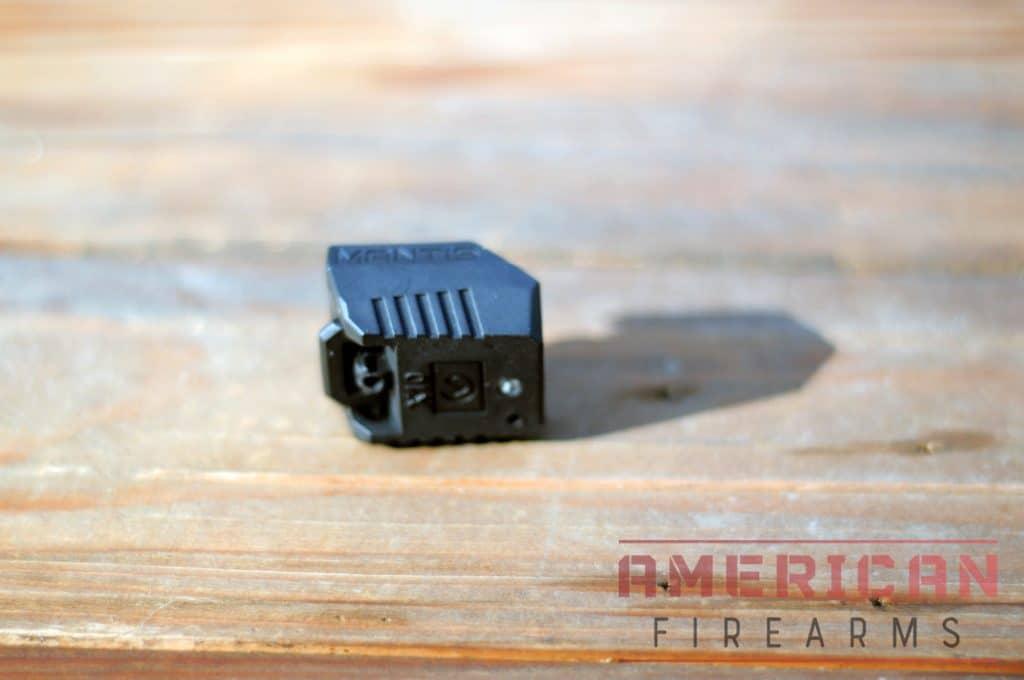
Perhaps the easiest to use shot timers these days have some kind of device that attaches directly to a rail section on your firearm and then connects to an application on your phone. To be fair, these can be a little finicky to set up, but once you do, they’re often both convenient and feature-rich. These kinds of shot-timers are great for folks who are just getting into the competition scene and are willing to do a little fiddling to get things set up the way they like it.
The downside to these is they are dependent on the type of firearm, which makes them a limited option for people who want to compete with multiple guns, especially those without handy rail sections.
Wrist-Mounted
Second, wrist-mounted shot timers look like a watch. These are excellent for people who want to look at their data instantly and plan on doing a lot of moving while they shoot. These timers are incredibly stable and sturdy because they are mounted to your wrist. A potential downside here is that when compared to most modern watches, even smartwatches, these tend to be a little bit bulky and awkward, which can slow down your ability to manipulate a firearm.
With that said, I think most people will get used to the form factor reasonably quickly and thus will not have a hard time adjusting to watch-style shot timers. I like these for especially active training sessions and more physical competitions, especially waterproof models.
Belt-Mounted
Finally, there are the more standard, belt-type of shot timers. These are the most common type, and if you plan on doing a lot of training, especially with varying kinds of firearms, these are likely the right choice for you. Many classes, for example, will mandate that you bring one of a few specific shot timers, many of which will be belt-mounted. In general terms, these are the standard within the shooting competition world.
I don’t love these because they can be more than a little bit bulky and can, in some cases, come off when you’re doing things like running, going over obstacles, or quickly going to the prone position. With that said, it’s not often that one of these does go flying off of a belt.
Essential Shot Timer Features
- Ease of Access. To get practical, the first thing you want is the ease of access – so look for a belt clip or some other means of attaching the timer to your body. Sure, some shooting ranges have handy tables, but it’s impractical to have someone follow you around with a timer when you’re practicing your competition runs.
- Battery Life. Second, make sure that the battery life is decent. There are few things as frustrating as ruining a practice session by being out of juice as soon as you get to the range.
- Random Start. For competition shooting timers – a random start timer will help you train your reaction times and draws. Also, make sure that the timer can track split times for the sake of consistency. This helps work down par times on tricky competition stages. A nice loud beep paired with a shot sensor and buzzer are good features as well – you’ll need to hear your timer clearly while wearing ear protection, and you don’t want to second guess yourself when trying to perform.
- Data. Most of them will report, at a minimum, your reaction time for your first shot, the split times between shots, and the total time for a series of shots. Some of the more fully-featured app-based models will also use some exciting laser technology to give you information about shot placement and trigger squeeze as well. While there is undoubtedly such a thing as too much data, it’s essential to have the information you need to improve your shooting over time.
- Display. Again, all of the data in the world is nice, but if you can’t read the display, all of that data is more frustrating than it is functional. Look for a model with a bright display that you can easily read. Keep in mind that you’ll likely be reading the display through shooting glasses, which can make reading up close a little difficult for some folks. A larger than average font is often our preferred choice in a shot timer.
- Ease of Use. Having a shot timer that is simple to use is also deeply important. Over-complication leads to time wasted messing around with the device rather than training, which, in my mind, distracts from the overall mission of becoming a better shooter through the use of data.I recommend going with a shot timer that has the features you need, very few that you don’t, and that has a user-friendly interface to help you access the data you need and get back to shooting and improving.
- Portability. portability and form factor of a particular shot timer is one of the more essential things when making a purchase. Depending on the kind of training we’re doing, I might want something that’s super rugged and portable. In a case like that, going with a watch-mounted version is ideal. On the other hand, if I’ve signed up for a training class that wants me to use a belt timer, that’s what I’ll do. There is no point trying out something that the instructor isn’t familiar with while everyone is just trying to learn instead of waiting for me to stop messing with a new device.
- High Shot Count Tracking. Finally, we like range timers that track up to 100 shots in total, so you can gather as much information as possible with each round: the more data, the better. Excelling at competitive shooting means blending a little art with a healthy dose of science.
Shot Timer Pricing
- Under $200. For under $200, you can generally get your hands on an entry-level shot timer, usually a belt-mounted model that will report reaction time, splits, and overall string time. These won’t be the fanciest models in the world, and the battery life might not last as long as you’d like, but the data you get from these make them valuable training tools. At this price range, I think there are excellent options for people who want to get into competition shooting in a serious way.
- Over $200. You can start to get more features, such as a memory module that keeps track of data over time. Additionally, most watch and app-based models are in this price range. The more you spend, generally speaking, the more features I get. For instance, some of the nicer app-based shot timers can track shot placement and interpolate what kind of issues you might be having with the trigger.
For a pretty straightforward device in operation, shot timers can be expensive. With that said, I think that they’re more than worth their cost in terms of improving your shooting over time.
Conclusion
When it comes to shot timers, any of the above options are going to give you good performance and bang for the buck.
With that said, the most important consideration is that your shot timer supports the kind of training you want to do and your shooting style.
We think that the Pact Club model meets a nice balance of features, cost, and comes ready to go out of the box, but the rest of the list is more than worth considering as well. Good luck!

Updated
December 28, 2025 — Added comprehensive “How We Test” section. New reviewd for SG Timer 2, SG Timer GO, & AMG Commander on this year’s list, and updated all existing reviews with fresh testing data, round counts, and performance metrics.
Sign up for our newsletter
Get discounts from top brands and our latest reviews!
View by Category

In-Hand Reviews

Firearm News

Featured Comparisons

Firearm & Ammo Reviews

Popular Guides & Stats

Range Gear & Accessories

Gun & Ammo Safes