
Taurus 856 TORO Review: I Fired 500+ Rounds With Zero Malfunctions On The Carry Revolver
Complete Taurus 856 TORO review with 500+ rounds tested, two optics compared, and honest assessment of the first factory optics-ready carry revolver. Compare prices, specs & alternatives. Is the red dot worth it? Find out.

Written By
Coldboremiracle
Precision Rifle Expert

Edited By
Michael Crites
Licensed Concealed Carry Holder
Share:
Products are selected by our editors. We may earn a commission on purchases from a link. How we select gear.
Updated
Sep 2026
There are many things I never thought I’d see in the firearms world, a bullpup AR15, an 8×57 M1 Garand, and a suppressed shotgun are a few that come to mind.
But a red dot mounted on a small frame revolver is a bit more believable, and today we are looking at the first example; the Taurus USA Defender 856 TORO in 38 Special.
In This Article
Overall Score
$399.99

26
AVERAGE
2026 Awards & Rankings
Performance Scores
Best For
- Unique TORO optics mounting system
- Very affordable
- Handsome appearance
- Compact design easily concealed
- Inexpensive to shoot in 38 Spl
Considerations
- Doesn’t have the reputation of its competitors
- Grip was a bit small for my hand
- High optics mount can create issues zeroing
- Heavy with optic and ammo
- No real holster support with optic mounted
Our Verdict
Carrying a revolver with an optic is a bit like being blasted into outer space; new, strange, kind of disorienting — but despite the journey into unchartered waters, I’ve been very happy with the Defender 856 TORO these past few months.
I’ll circle back to where I started; I have wanted to like the affordable brand of Taurus for a long time. They certainly knocked it out of the park with the TX22, and so far I am liking the Defender.
Both of these products have gone a long way to help me rinse the bad taste once left in my mouth. Taurus has once again flexed its muscle at packaging a performant firearm in an affordable package.
Plus the optic cut 856 TORO version is like $15 more than the non-TORO version of the 856 so if you don’t like running an optic on your wheel gun you can always just pop it off, drop a fiber optic front sight on it, and you’ve got yourself a decent little carry revolver.
If you are looking for an affordable everyday carry revolver in 38 Spl, I think this is a great little option to try out.
And it’s affordable enough that if you don’t like it you haven’t lost a fortune — at this price, I think you’ll be hard-pressed to find an optics-ready revolver if you’re a bit of a gear junkie like me. Revolver fans should definitely check this one out.
Test Scores
So… how does the Taurus 856 TORO stack up on our 60-point scale?
Accuracy: 8/10
I could get consistent 3-5 inch groups at ten yards and reliably hit targets at self-defense distances. Plus I had no issues zeroing the optic effectively.
Ergonomics: 8/10
The Taurus Defender 856 TORO is small and easy to manipulate, has a comfortable (if a touch small) rubber grip, smooth controls, and it’s easy to reload.
Fit and Finish: 8/10
The matte black finish looks good and the laser engraving is sharp. The gun is well-fitted, but the durability of the finish could be improved.
Features: 8/10
The TORO optics mounting system is significant and innovative for a small frame revolver, plus you get a full-length ejector rod and a smartly designed hammer spur, but no holsters at the moment.
Reliability: 9/10
No issues or malfunctions during our shooting tests. It’s a straightforward, simple revolver that reliably goes boom.
Value: 9/10
Taurus Defender 856 TORO keeps with the Taurus approach of affordable firearms. It looks good, is easy to carry, and you can blow through .38 Spl ammunition without breaking the bank.
Specifications
Frame size: | Small |
Caliber: | .38 Spl |
Weight: | 23.5 ounces |
Overall Length: | 7.5 inches |
Height: | 4.5 inches |
Barrel: | 3.0 inches |
Twist Rate: | 1:16.5 Right Hand |
Capacity: | 6 |
MSRP: | $445.99 |
All data from Taurus |
How We Test Carry Revolvers
Accuracy & Trigger Feel
We evaluate revolver accuracy through structured bench rest testing at multiple distances. For the 856 TORO, we fired groups at 7, 15, and 25 yards to assess both practical defensive accuracy and the gun’s mechanical precision.
Reliability & Function
Revolver reliability testing differs significantly from semi-automatic protocols. We fire a minimum of 500 rounds through each test revolver, using a mix of ammunition types.
Durability & Construction
After our firing tests, we thoroughly inspect the revolver for wear patterns, finish degradation, and any mechanical issues that developed during testing.
Concealment & Carry
We evaluate the revolver’s carry characteristics across multiple methods; inside-the-waistband (IWB), outside-the-waistband (OWB), pocket carry (if dimensions allow), and off-body carry considerations.
More on Our Testing Process
A Tale of Two Taurus's
Taurus is a common name in the firearms world, and in recent years they have been working hard to change their reputation from a poor-quality clone operation to that of a world-class firearms manufacturer.
Far too often gun owners will recount negative stories when Taurus guns come up, I even have a few myself. But for now, let’s put that aside.
A few years back, Taurus released one of their many new pistol models. Despite my caution from previous experiences, I had to give the TX22 a try after handling it at SHOT Show. I’ll spare you all the details, and just say this; four years later I now have a collection of 4 TX22s, both the standard and compact models, and I have to say I absolutely LOVE them.
Their new products are — in my experience — very reliable, and an absolute hoot to shoot for my entire family. So after having had a great experience with modern Taurus models, I figured I would give the Defender 856 TORO a try.
Taurus has clearly invested in new people, processes, and leadership that has made serious differences in its product development, standards, and QC. The question in my mind was simple — was the TX22 a fluke or has Taurus really turned a corner?
Why the 856 TORO Matters
To understand what Taurus accomplished with the 856 TORO, you need to understand what made the classic carry revolver work in the first place. For decades, the formula was pretty well established: a medium-frame wheelgun with a 3-inch barrel, fixed sights, and round-butt grips. Think Smith & Wesson Model 13 or Model 65. These were the guns that FBI agents carried, that plainclothes detectives relied on, and that serious shooters trusted their lives to.
The logic behind every element was sound. Medium frame meant six rounds instead of five, giving you that extra shot without jumping up to a full-size service revolver. The 3-inch barrel delivered better velocity than snubbies while remaining short enough to clear leather quickly from concealment.
It also allowed a full-length ejector rod—something often overlooked but critical when you’re trying to dump spent brass under stress. Fixed sights eliminated adjustment screws that could snag clothing or shift zero, while keeping the profile smooth for the draw.
That was the gold standard for defensive revolvers from roughly the 1970s through the 1990s. Then the bottom dropped out of the revolver market. Semi-autos took over, capacity became king, and wheelguns were relegated to backup gun duty or the pockets of traditionalists who simply refused to let go.
But here’s the thing about revolvers—they never actually stopped working. While the gun world chased double-stack 9mms and micro-compacts, revolvers quietly continued doing what they’d always done: going bang every single time you pulled the trigger, with zero chance of a limp-wrist malfunction or a failure-to-feed ruining your day. The fundamentals that made them work in 1985 still apply in 2024.
What changed wasn’t the revolver. It was the technology around it.
Red dot sights on handguns went from competition curiosity to mainstream defensive choice in less than a decade. By 2023, you could hardly find a new striker-fired pistol that didn’t come optics-ready from the factory.
The benefits were clear: faster sight acquisition, better precision at distance, easier to shoot well under stress. For aging eyes losing their ability to focus on front sights, red dots were nothing short of revolutionary.
Yet revolvers got left behind in this evolution. Sure, you could mount a scope on a Redhawk for hunting, or competitive shooters had been running optics on their race guns for years. But nobody was making an optics-ready carry revolver.
The geometry didn’t work—you can’t cut into a revolver’s top strap the way you mill a slide, and mounting plates sat so high that zeroing became a nightmare. The handful of custom shops offering the service charged accordingly.
Taurus looked at this problem and asked a simple question: what if we just made it work anyway?
The TORO system—Taurus Optic Ready Option—isn’t elegant. It’s not a perfectly milled slide cut. The optic sits higher than ideal, and co-witnessing with iron sights isn’t happening. But it exists, it’s factory-supported, and it costs just $16 more than the standard 856 Defender. That’s the genius here. Taurus didn’t aim for perfection; they aimed for practical, affordable, and available now.
They chose the 856 and 605 models deliberately. Not the tiny pocket guns that are already pushing the limits of controllability. Not the massive .44 Magnums that hunters were already putting scopes on anyway.
They picked the modern equivalent of that classic carry revolver formula—the six-shot .38 Special and five-shot .357 Magnum in three-inch barrels—and asked what would happen if you put 21st-century sighting technology on a platform that hadn’t fundamentally changed in fifty years.
The answer turned out to be pretty interesting. The red dot doesn’t reciprocate with a slide, meaning it stays put during recoil and makes rapid follow-up shots easier than on any semi-auto.
The natural pointability that wheelguns are known for translates to finding the dot almost instinctively. And for those of us whose eyes aren’t what they used to be, being able to focus on the target while a sharp dot floats over it is legitimately game-changing.
Is the 856 TORO perfect? No. Could the mounting system be more refined? Absolutely. But it exists, it works, and it opened a door that nobody else was willing to walk through.
Whether you’re a revolver die-hard looking to modernize your carry gun or someone curious about whether red dots work as well on wheelguns as they do on semi-autos, the 856 TORO represents something genuinely new in a market that desperately needed fresh thinking.
That’s why this gun matters more than its modest price tag might suggest. It’s not just another revolver—it’s proof that the wheelgun isn’t done evolving yet.
The Model 856 & Its Optic
The Model 856 is part of the Model 85 family of small-frame revolvers. The stainless steel frame wraps around an exposed hammer and six-shot stainless-steel cylinder, adding an extra round over other Taurus Model 85’s and the similarly-sized Ruger SP101.
At current Taurus has sixteen 856 variants in their catalog, with different barrel lengths, finishes, and materials — either carbon steel or lightweight aluminum frames — with the “Defender” series the steel-framed 3-inch barrel models and standard 856 with 2-inch barrels.
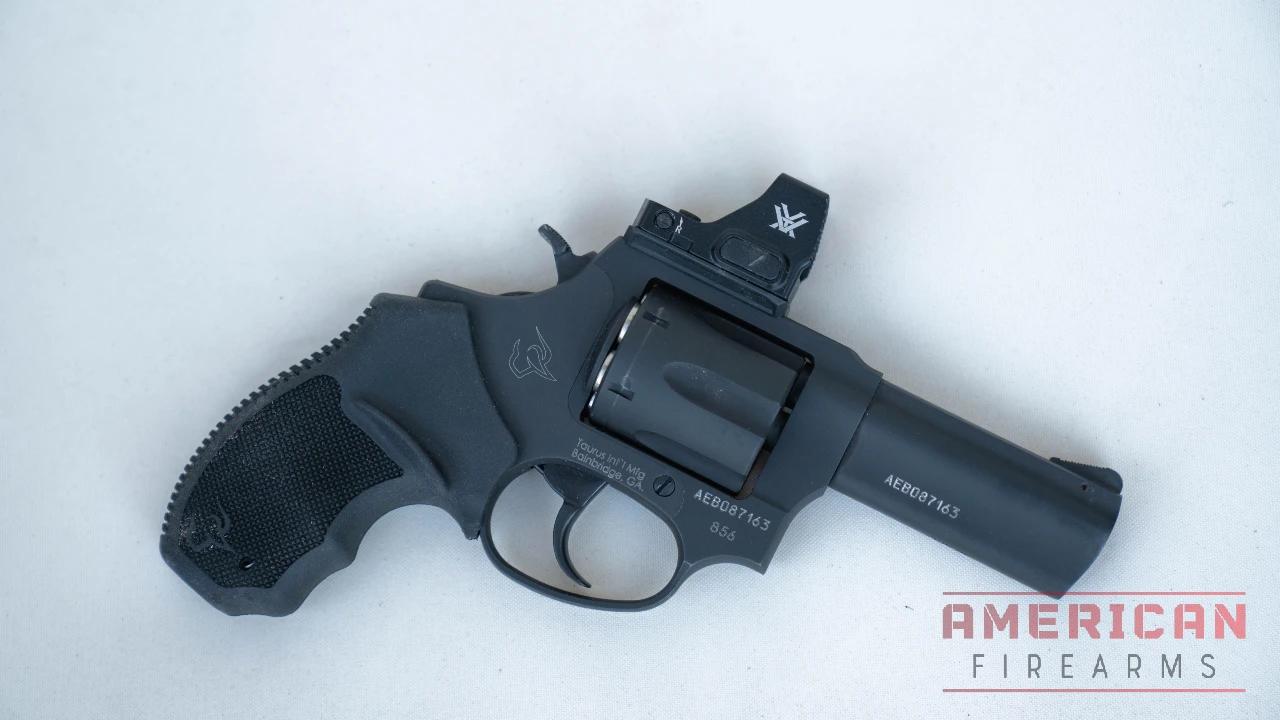
To create the 856 Defender TORO, Taurus took the steel version of their classic 856 Defender and added an optic plate — specifically a Holosun K optics base plate — that mounts over the rear sight and is attached by two screws. Taurus also released a TORO version of their 605, which is similar to the 856 but chambered in .357 Magnum with a 5-shot capacity.
This makes these Taurus TORO series the first small frame revolvers to come optics ready from the factory. Sure, hunters and competition shooters have had optics in play forever, and there’s no shortage of optics plates for medium and large-frame wheelguns, but when it comes carry revolvers you were likely going to have to turn to a custom shop.
Yes, one can debate the logic of even adding an optic to a carry piece, but that is a hill for another day. Chances are this is a “love it or hate it” kind of product for most.
The Defender 856 uses Taurus’ target-style double action trigger and is rated for +P 38 Special loads. I almost wish I’d have gotten a 357 model, but to be honest, if I had I would have likely used mostly 38 Spl ammo anyways. My Grandfather was quite a fan of the old Special, and I inherited a massive collection of brass and molded bullets that Grandpa carefully made long before I was old enough to even shoot them.
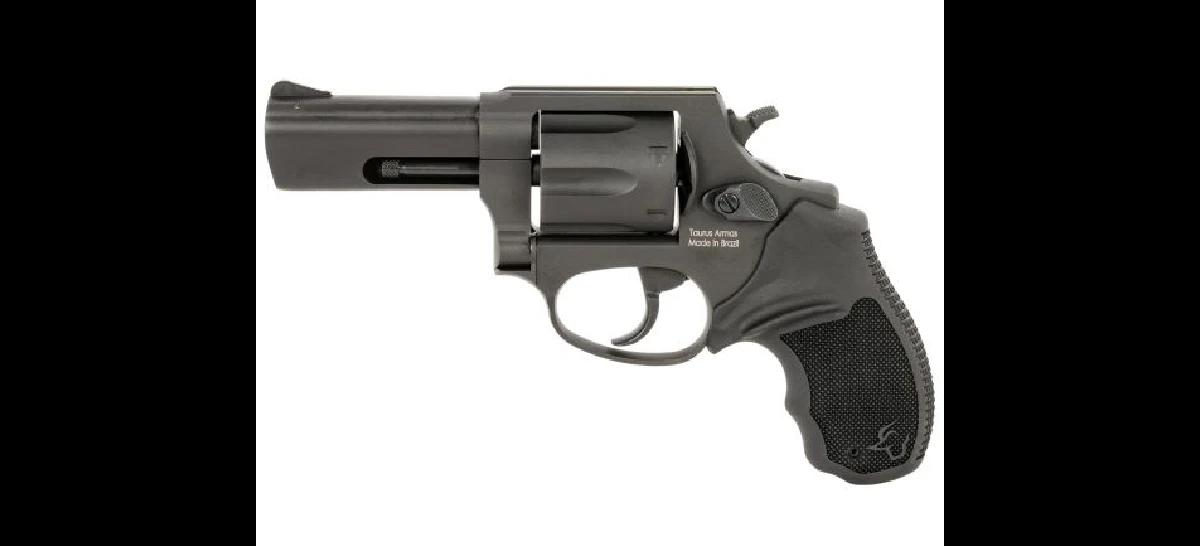
Like a number of Taurus revolvers, the factory grip of the Defender is a soft rubber one, with a comfortable texture to help grip the small handgun. There is a traditional built-in rear sight as part of the top strap if you happen to be one of those who don’t care for red dots, but to be honest, without the optic mount the 856 is really just a basic, affordable, 3-inch .38.
Not that I’m hating on basic revolvers — in my opinion the revolver market is a little too focused on marking-up nostalgia — but the real trick Taurus pulled off here is the optics support.
Key Features
Action
The Defender 856 is a double-action revolver that uses a safety transfer bar to engage the firing pin. This allows the Defender to be fired from either a hammer-down or locked-back scenario depending on what you desire.
The transfer bar is a more modern development that transfers the energy from the dropping hammer to a separate firing pin. This design is to add a level of safety to the gun, as the trigger must be fully pressed to the rear for the transfer bar to engage the firing pin.
Older revolvers had the firing pin directly attached to the hammer, which meant that any time the hammer came down there was potential for striking the primer. Also, there could be an issue with any kind of impact on the hammer causing the gun to unexpectedly fire. The transfer bar design greatly reduces the possibility of accidental discharges.
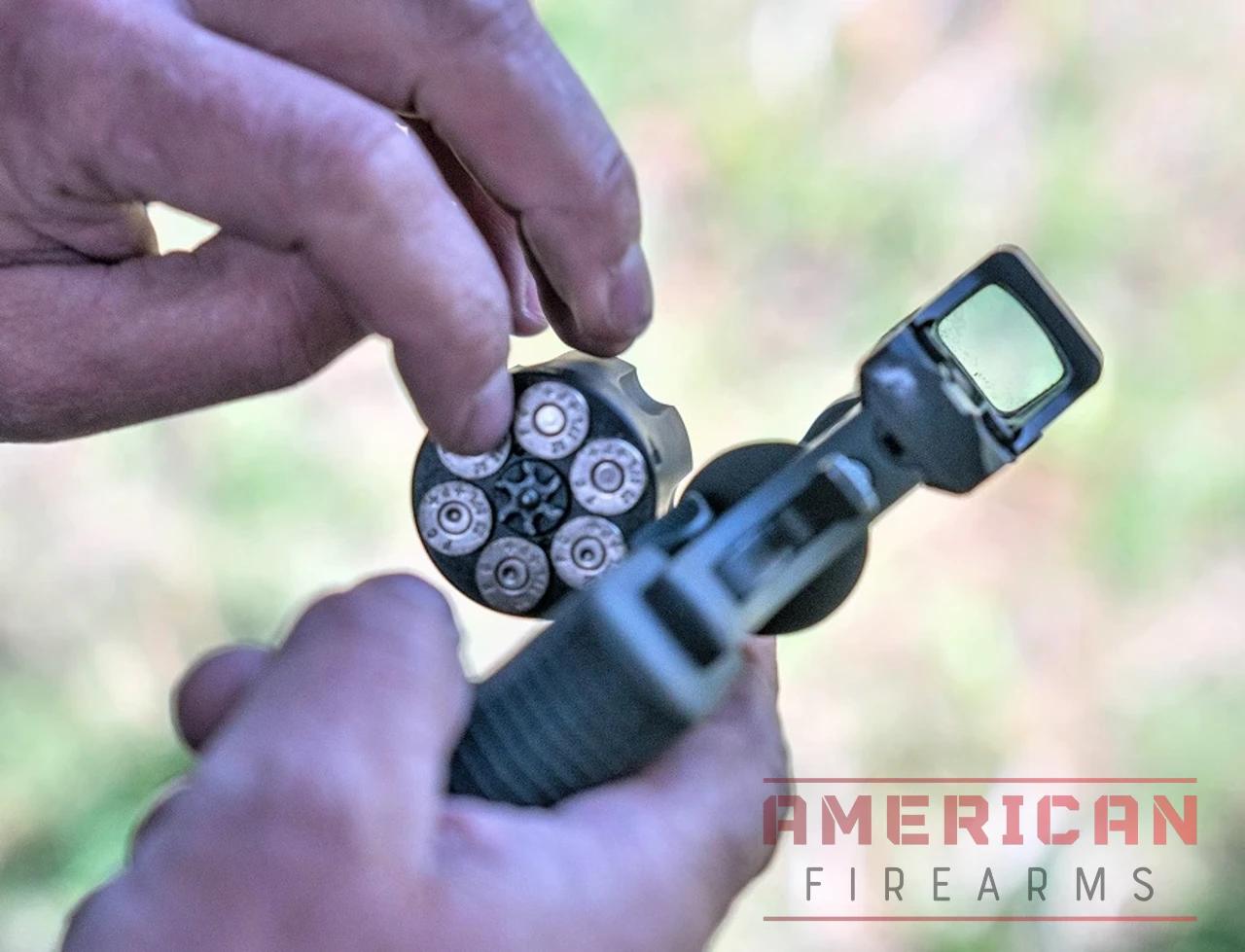
The Defender 856 is a six-shot revolver, with a cylinder bored for six, that’s one round ahead of other comparable models. The cylinder is released using the traditional thumb button, once unlocked it can be swung out the left side of the firearm. There is also a traditional plunger to push spent cases out toward the rear of the cylinder.
Grip
Revolver grips are always imperfect, but the rubber grips on the 856 aren’t bad. They have a textured and ribbed backstrap, which made the pistol very comfortable to shoot. Not that .38 Spl is particularly heavy recoiling, but it was still a nice feature.
I don’t consider my hands to be particularly big, but I did find the grip to be just a touch small for my liking. Taurus could have added a little more material to the front and rear of the grip to help fill the shooter’s hand a little more successfully without compromising concealment.
That said, I understand the Defender is marketed as a CCW so having a smaller grip is certainly an advantage for concealment. Of course, replacing the Taurus grip would be a simple affair with many options available from VZ, Hogue, and others.
Trigger
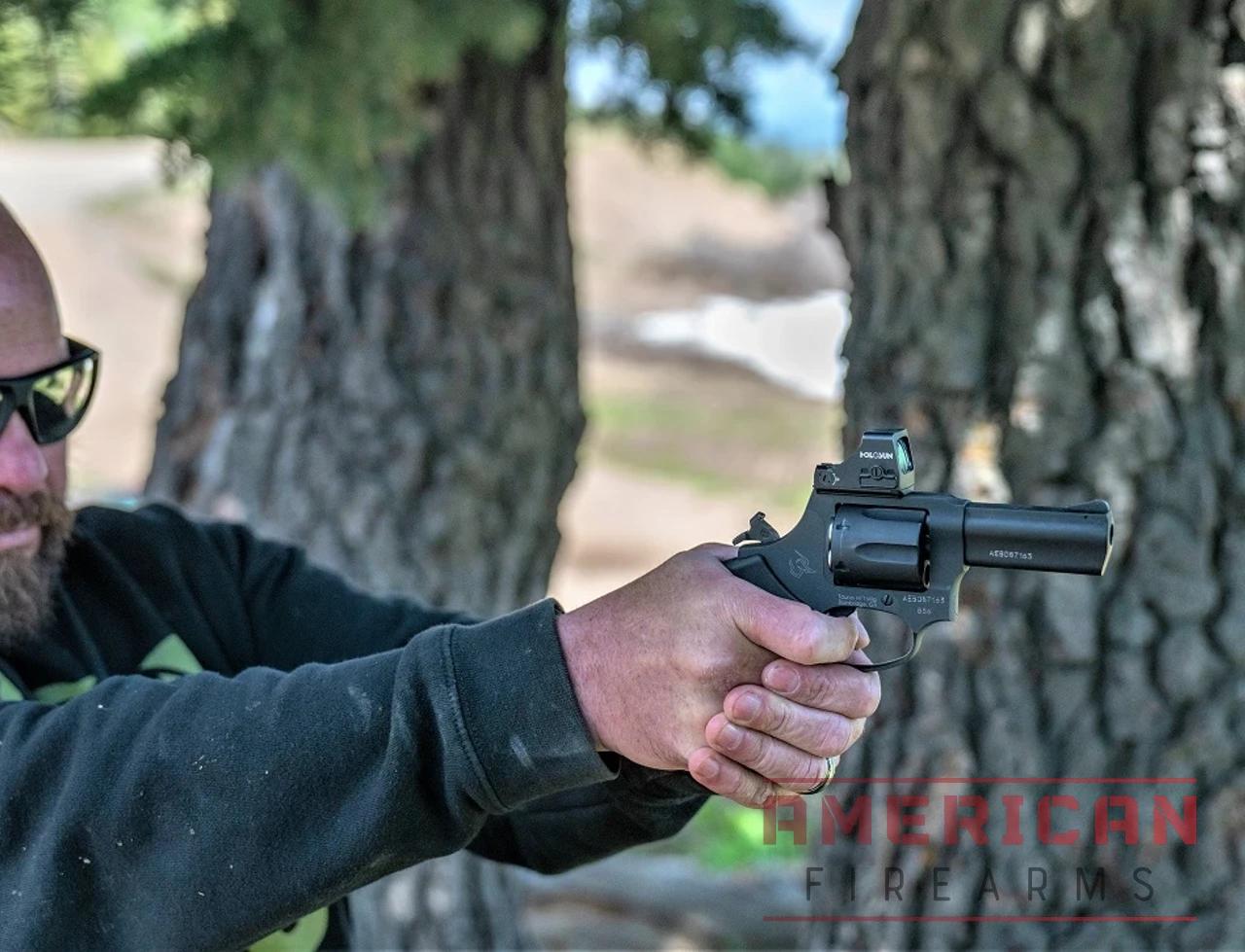
The target trigger included with the Taurus 856 felt perfectly adequate for a CCW pistol. It wasn’t anything particularly spectacular, but I wouldn’t expect it to be, in fact it reminded me a lot of a S&W J-Frame trigger. The trigger is slightly long, and heavier triggers seem to be standard for personal defense weapons, which I’m ok with. The pull and feel improves with dry practice but is still heavy at the end of the day.
Nobody wants to be the guy that ends up in the ER with a lower torso gunshot, or worse. It’s a straightforward, slightly heavy trigger pull, as it should be.
Barrel
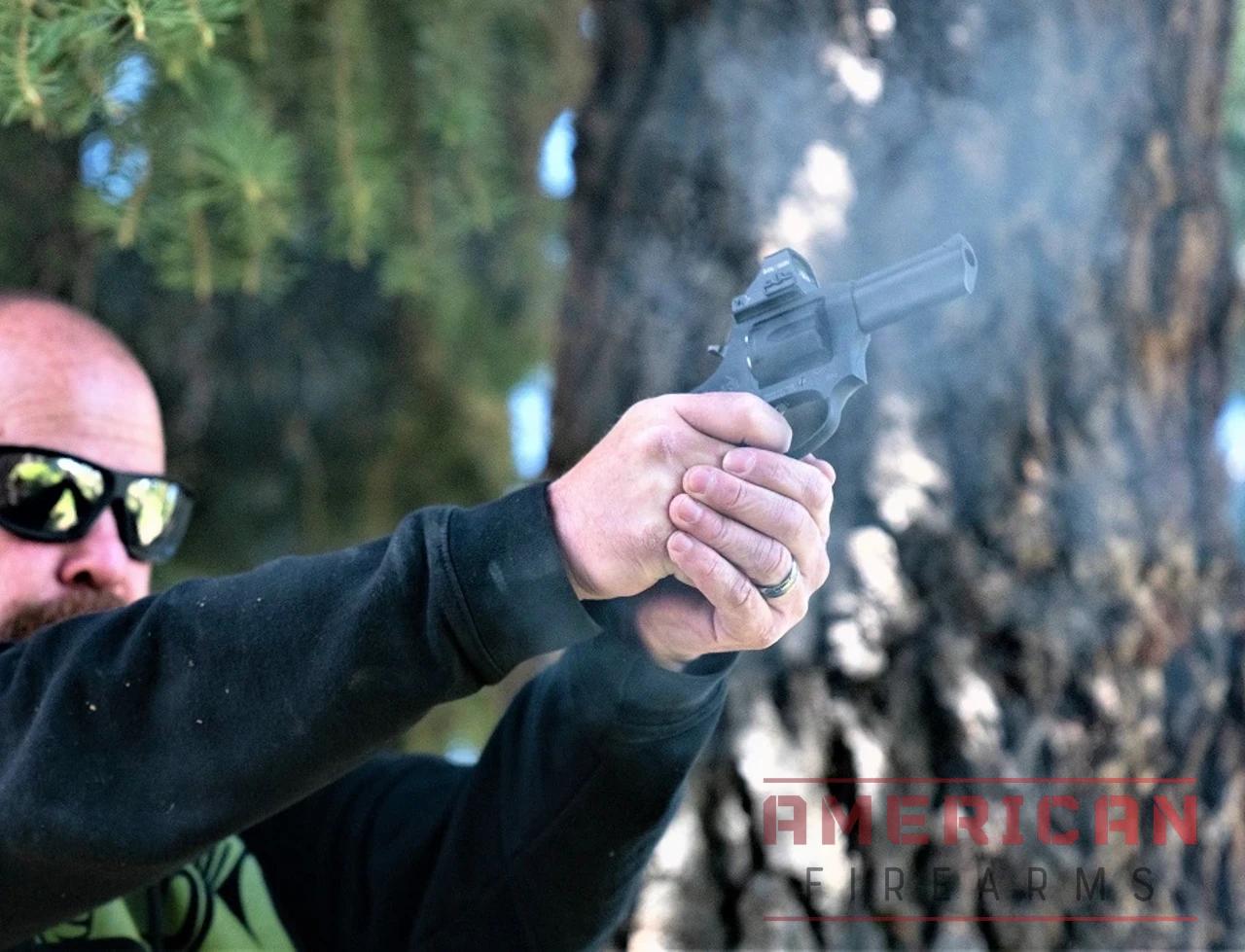
The three-inch barrel seems to have done very well at sending countless 38 bullets downrange for over a hundred years, and this one certainly fits the bill. And as with the grip, the short barrel seems to aid in keeping the little TORO out of sight when carried.
Sights & Optics Support
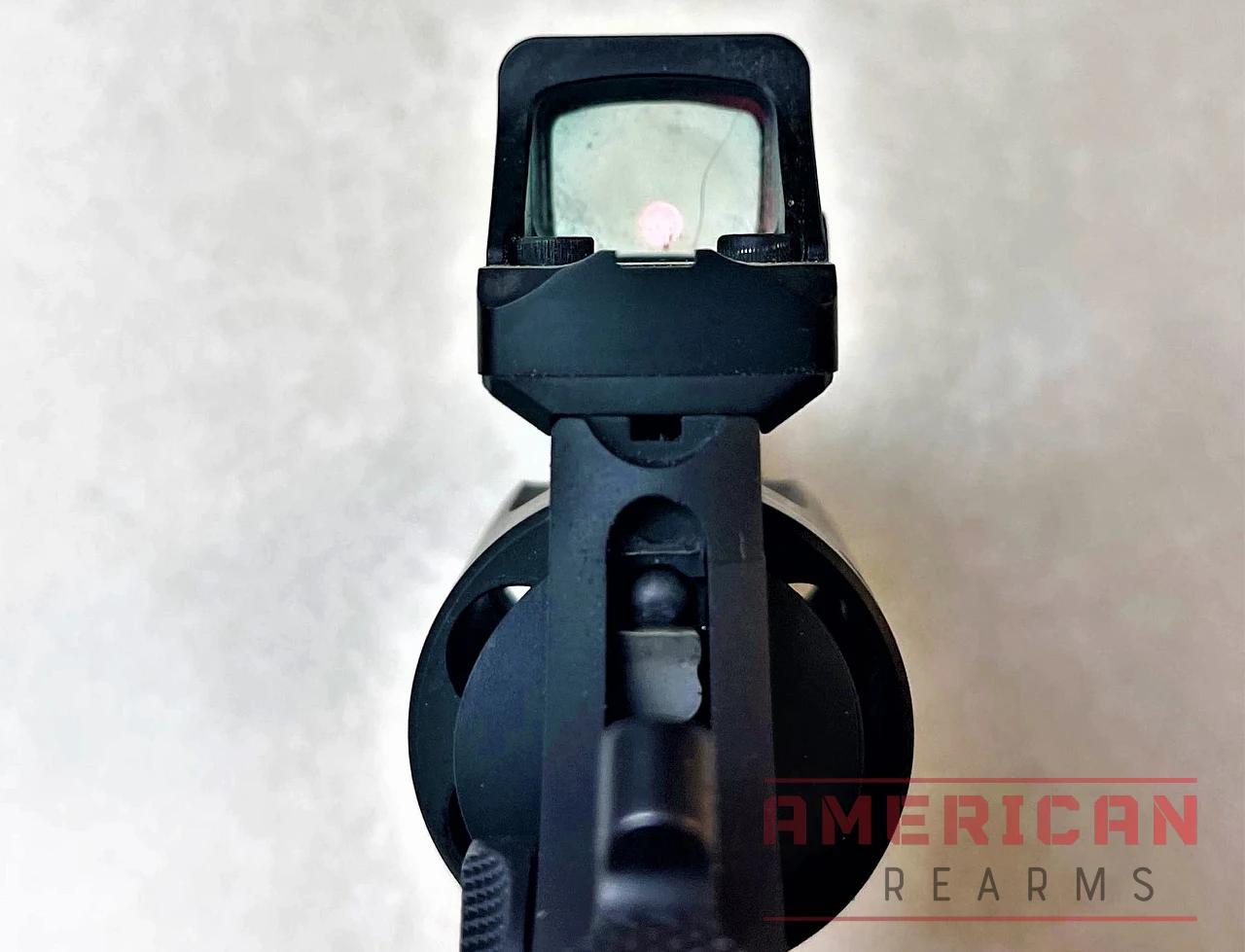
The irons on the Taurus 856 pair a serrated ramp front sight with a rear trench sight, which is pretty bog standard for small revolvers. Interestingly the front sight is pinned to the barrel rather than machined into it, so if you want to swap the front sight out for a night sight or fiber optic the aftermarket will welcome your dollars.
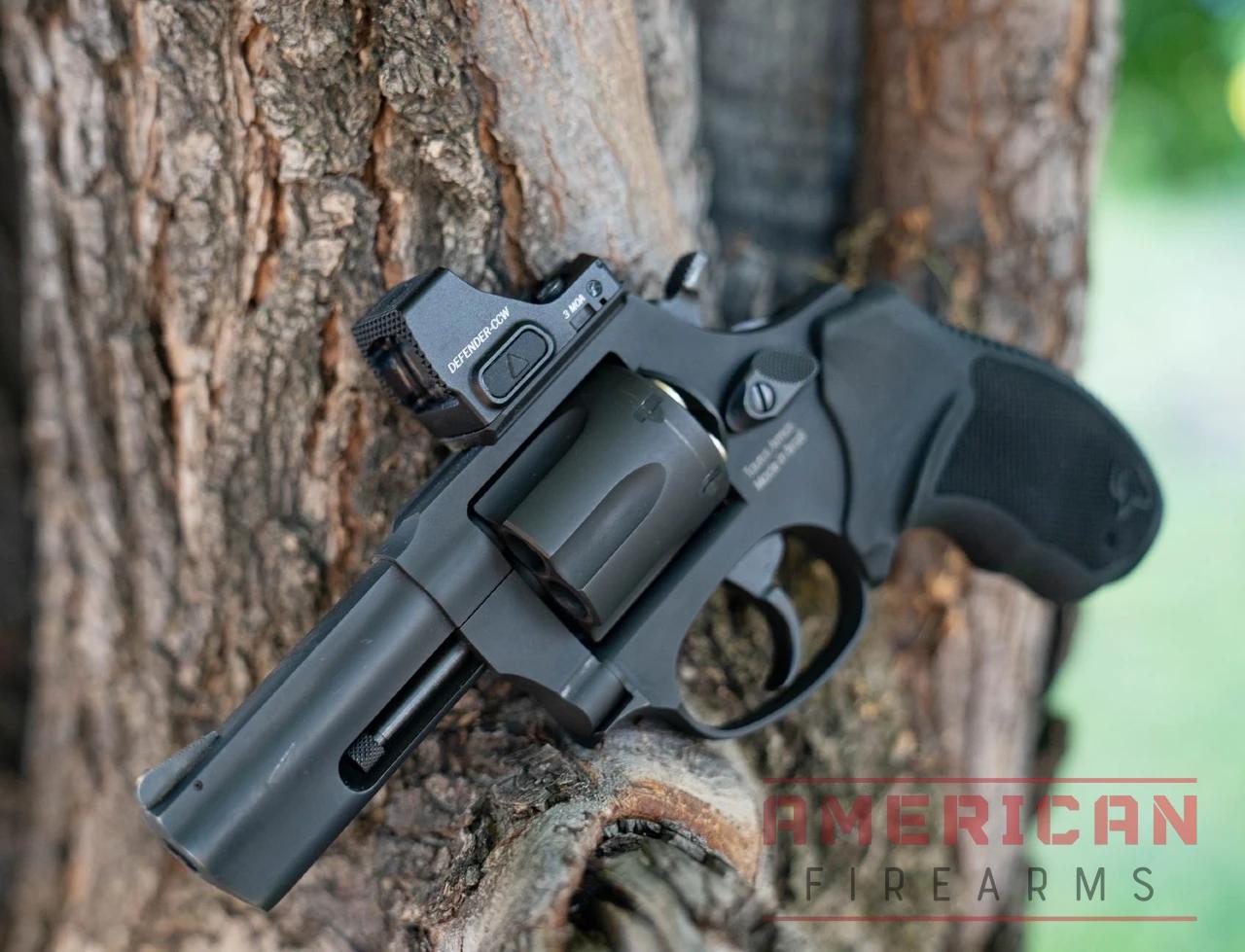
Perhaps the most important feature to mention is the sighting options with the Defender TORO. As the title feature of the gun, the Taurus Optics Ready Option (TORO) is certainly something interesting. The optics mounting plate is machined to perfectly fit the top strap of the revolver, just in front of the rear sight.
It is attached using two torx screws that thread into the threaded top strap of the frame. The fit was very snug, it fit so well that just setting it in place, it appeared to stick to the frame.
In addition to the two screws that hold the plate down, there is mechanical engagement to lock the plate against the frame under recoil. On top of the plate, there are two threaded holes in the top of two studs that fit neatly into the base of a Holosun 407K or compatible red dot. With a drop of Loctite each, I snugged down the two screws securing the red dot to the top of the pistol.
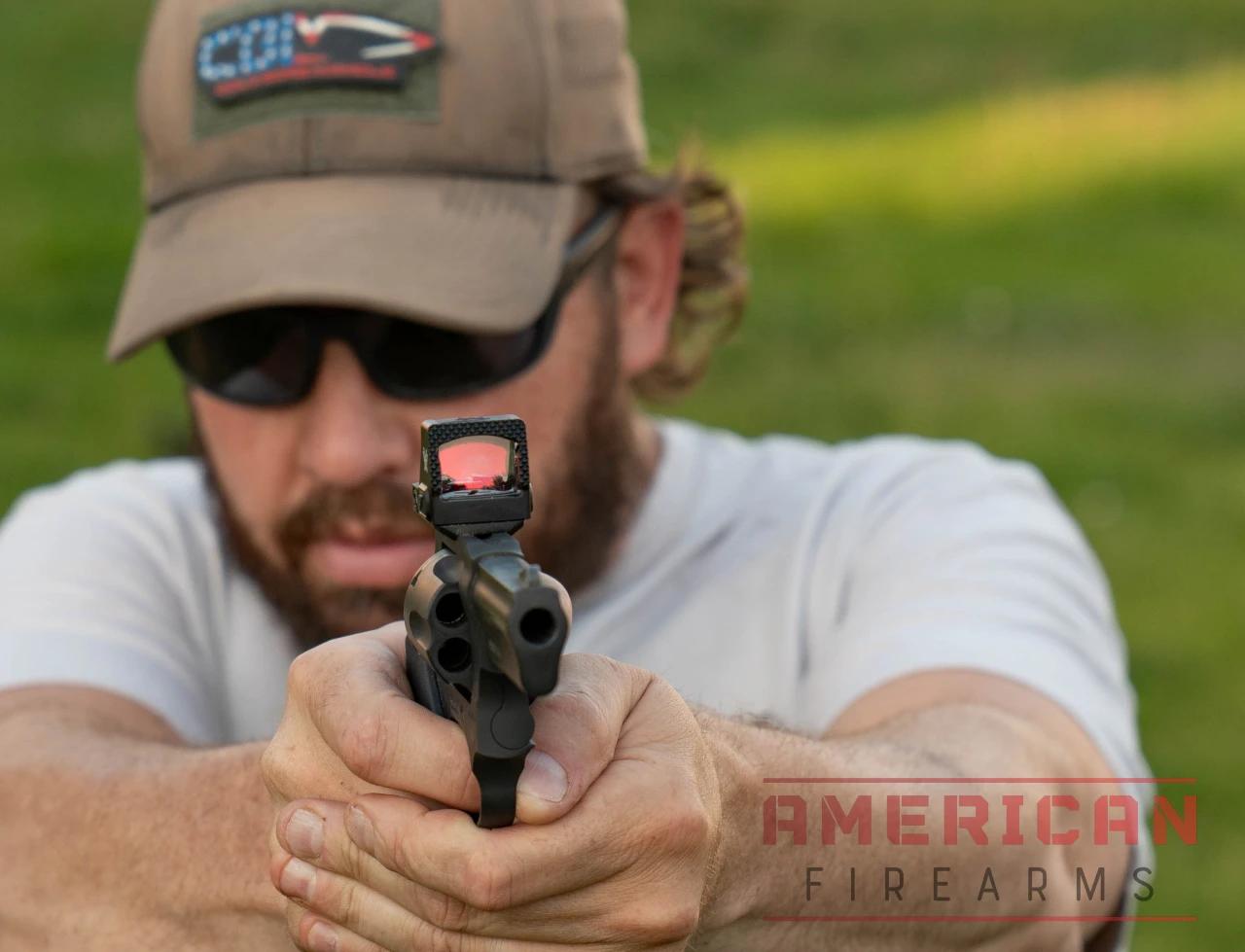
In addition to the 407K, I also took the opportunity to mount the new Vortex Defender-CCW red dot. In my mind they seemed like they were made for each other as a perfect fit, I mean they both have Defender in the title!
I cracked open the box containing the Vortex and pulled it from its packaging. It came with a plethora of different mounting screws and other accessories. After removing the Holosun, I set to mounting the Vortex to the mounting plate of the little Taurus.
The studs on the mounting plate just barely fit into the base of the Vortex red dot, and after tightening the screws it seemed almost like a press fit.
Once installed, the red dot grew on me a bit. It did seem to have a touch more flare than the Holosun, but it seemed fine to my aging eyes.
Both red dots seemed a good fit for the Taurus 856 TORO, If you asked me I’d say they were a bit of a toss-up as to which one I prefer. I guess you can pick your favorite and rock it till you run out of ammo.
Initial Thoughts
I am a fifth level black-belt in goofing off in the beautiful Rocky Mountains that surround me on any given day. So I figured on this particular trip into the mountains I would bring along the little Taurus to see how it runs.
I had brought along a bag full of 38 Spl handloads that consisted of some 150-grain semi-wadcutters loaded in nickel-plated Federal cases.
Now, history tells us that reliability and affordability often run in different directions, especially when it comes to revolvers, and the 856 TORO is not without its shortcomings, which I’ll detail as we come to them.
When it comes to small frame revolvers there really isn’t much real estate for an optics plate — there’s no slide to burrow into — so you’re stuck mounting them on the top strap. That means any optic on a revolver is going to be much higher than the bore, and the Holosun 407K was a good half-inch above it, which means there’s no way to co-witness your sights unless you want to mount a shark fin on the front of your revolver (and then good luck with holster fit.)
Of course, not mounting the optic to a reciprocating slide means the optic stays put when firing, and theoretically shouldn’t get as beat up with use, helping them last much longer.
After mounting a Holosun 407K, the optic was lined up with the iron sights without any adjustment, which was great because it’s possible to run out of elevation adjustment before getting to zero with optics on revolvers. When this happens you’re always shooting high, which only becomes more pronounced with additional yardages. I figured I’d just send it and see how it worked out.
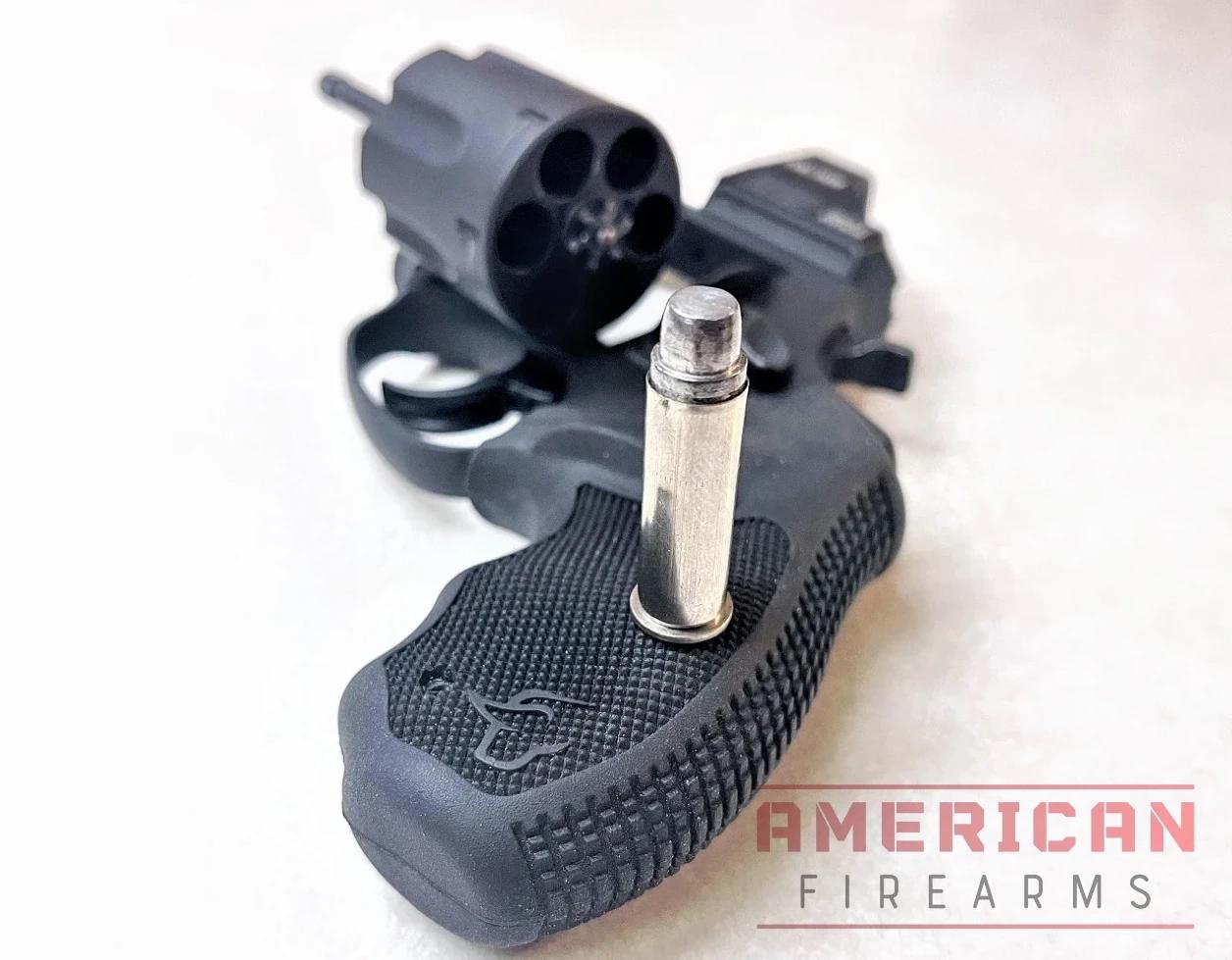
There’s no way around the fact an optic on a revolver is, well, awkward. The combination of a curvy revolver and boxy optic produces something that feels like it came out of a bad episode of Dragnet — one where aliens come to Earth and hand Joe Friday some 50’s vision of a futuristic firearm. It’s odd looking, for sure.
Oddball looks aside, I fired the first few rounds aiming at a small piece of wood in the dirt. I was quite happy with the point of impact, so I continued shooting. There is a little something about the bark of a straight-walled wheel gun that for some reason seems to make everything seem right in the world.
The height of the optic window on a revolver means it can be much more difficult to “find the dot” on a revolver than with a semi-auto, but I didn’t struggle to find it as much as I thought I would.
The recoil generated by the old handloads was quite mild and yet sounded rather peppy. I adjusted my grip to better suit the smaller-than-I-was-used-to grip and it didn’t take long at all to get comfortable enough to smash just about anything within a dozen yards or so.
Reloading the little cylinder was fast and easy, empty shells dropped freely from the cylinder ready for another half dozen to go back in.
I had brought along some tools to remove the red dot, so I could see if I showed a preference one way or the other. The iron sights are easy and useful, but I certainly think Taurus is onto something with the red dot.
I have recently been on a red dot kick, so my preference may be due to that as well. As I am absolutely fine running a revolver with iron sights. I think it almost makes more sense, particularly from that traditional perspective.
But for me, the red dot junkie, I will keep the Holosun right where it is. That is unless I don’t swap it out for the new Vortex Defender which seems to be the perfect companion for the Defender 856.
I would have liked to have gotten a decent holster for the Taurus before writing this. I frequently carry an assortment of handguns, and I would have liked to carry the small revolver for a few weeks.
The compact size would make it pretty comfortable in an IWB holster like this one from Black Point Tactical or even a pocket holster, but with the optic installed the 856 TORO won’t fit in any current 856 holsters, which is a bit of a drag.
I suppose there’s always a DIY solution with a box cutter if you’re desperate, but I hear there are a few options on the way.
Performance
| Ammunition | Vel. (fps) | E.S. (fps) | S.D. (fps) | 25-Yd. Acc. (in.) |
|---|---|---|---|---|
.38 Special 3.0-In. Barrel | ||||
Remington 115-gr. FMJ Bulk Pack | 881 | 41 | 18 | 4.25 |
Blazer Brass 115-gr. FMJ | 896 | 35 | 14 | 4.00 |
Federal Syntech 150-gr. TSJ | 748 | 22 | 9 | 3.25 |
Hornady Critical Defense 110-gr. FTX | 975 | 31 | 13 | 3.00 |
Federal 135-gr. Hydra-Shok Deep JHP +P | 894 | 26 | 10 | 2.75 |
Federal 124-gr. HST JHP +P | 912 | 33 | 12 | 3.25 |
NOTES: Accuracy is the average of three, six-shot groups fired from a sandbag benchrest with Holosun 407K red dot optic mounted. Velocity is the average of 10 rounds measured 12 feet from the gun’s muzzle. All testing conducted with 856 TORO featuring 3-inch barrel. +P ammunition tested to verify proper function and reliability in +P-rated cylinder.
Accuracy
With concealed carry-themed weapons, hitting your target can mean the difference between life and death. While I am in the lucky majority to have never needed to execute such a skill, it is a subject that is always on the mind of concealed carriers.
The ability to hit your target on the first shot, and as many consecutive hits as possible is an extremely valuable feature.
The 38 Spl has a similar ballistic performance to the extremely popular 9mm, and six rounds of these little rascals stacked in the vitals would certainly dampen the spirits of a would-be assailant.
Shooting the Defender at ranges between ten and fifteen yards proved it to be very valuable for the aforementioned purposes. Hitting paper plate-sized targets at those distances was only challenging when having to do so under pressure.
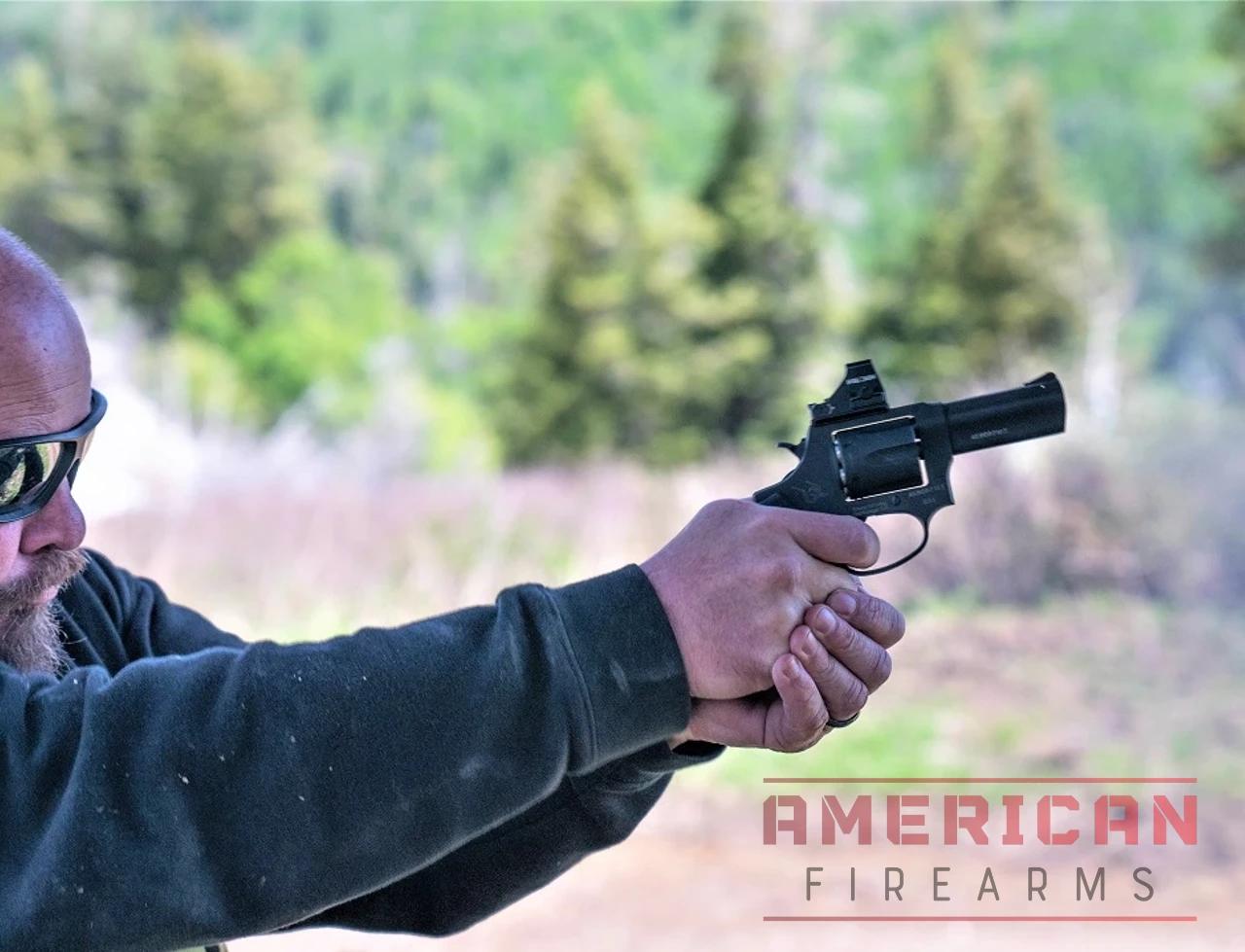
Whereas shooting a group on paper demonstrated accurate shot placement was fairly easy to repeat, with groups patterning around 3-5 inches at ten yards with both handloads and self-defense loads (specifically Hornady Critical Defense).
If you struggle to achieve zero at 15+ yards and have run our of elevation adjustment, consider running +P bullets, which can help lower the point of impact a touch with the additional FPS.
Taurus has confirmed the 856 TORO will zero effectively with a few specific optics — specifically the Primary Arms Micro Reflex, Riton X3 Tactix MPRD, and Swamp Fox Sentinel.
I also hear that Taurus is working on an angled mounting plate that will further ease zeroing optics on the TORO line.
Ergonomics
The Defender 856 is quite a petite little handgun, which makes it easy to manipulate. For someone with large or very large hands, it might be almost too small. The rubber grip gives an excellent purchase for the hand, though it might be a little short for some. If it was a 357 cylinder instead of 38 Spl, I would probably want a bigger grip to hold onto.
The controls of the pistol are smooth and easy to operate, which is to be expected on a revolver. The smooth spinning cylinder and easily actuated plunger make reloading the pistol a breeze.
I will say that getting used to the elevated optic took a minute to accommodate, as most of you probably are, I am also used to looking down the top strap of the pistol to aim. The red dot mounted on top is a bit taller which took me a minute to get a feel for. But once I did, it felt fantastic.
The little revolver is also quite heavy. Unloaded and without an optic, you’re looking at 23.8 ounces. Then add another 4 ounces of optic, optic plate, and ammo and you’ll be toting just over 28.2 ounces loaded. Think of the 856 TORO less in the ballpark of an LCR, and more like an SP101 or Kimber K6S. Although the 856 is decidedly more comfortable to shoot than the LCR, so there’s that.
Features
Most revolvers are fairly no-nonsense, there are not an incredible amount of features you can add. Things such as sight mounting options, ported barrels, and adjustable sights come to mind.
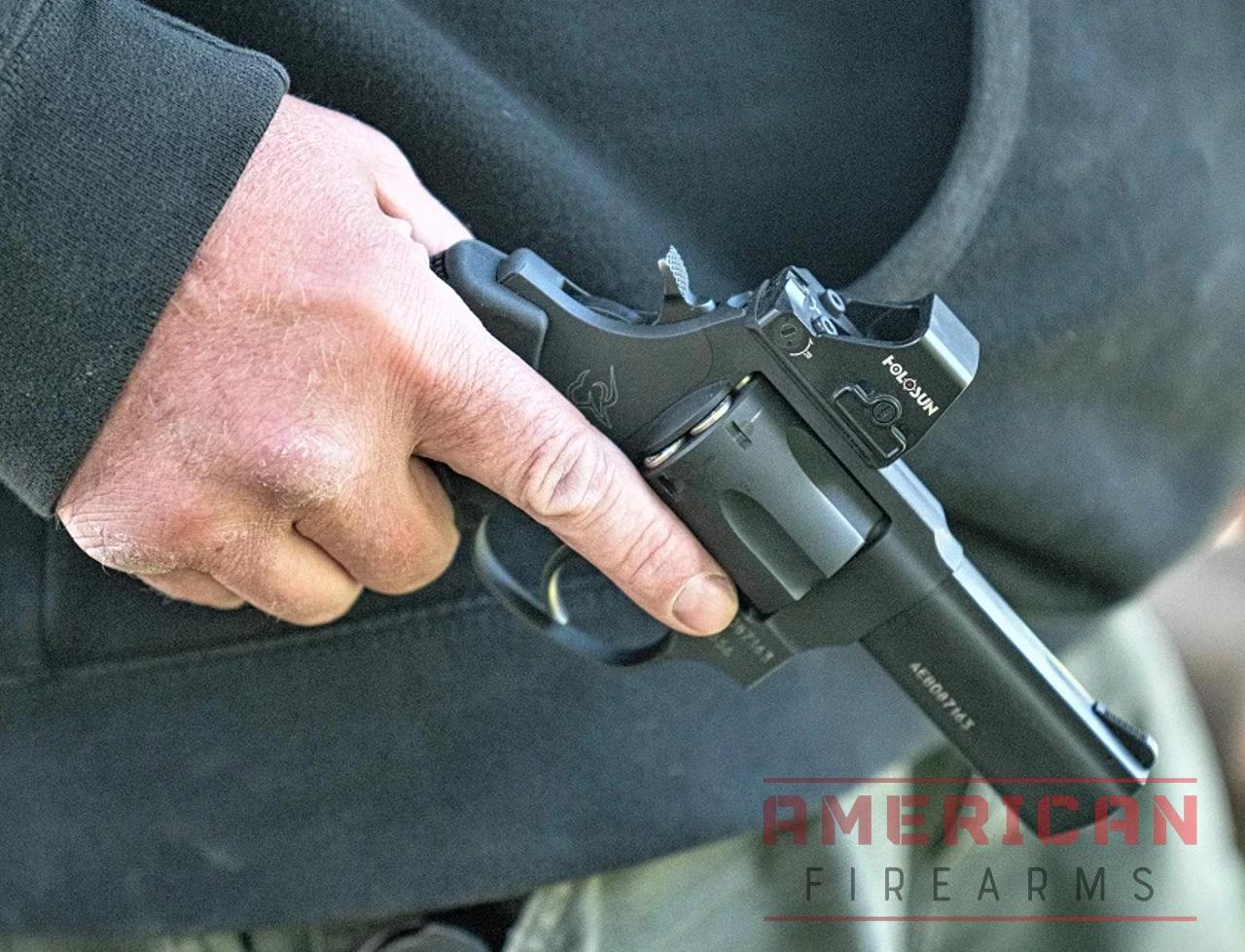
The Defender comes with its headlining feature which is the TORO system, which is not an insignificant feature. It also doubles as what we’ll call adjustable sights, quite the opposite of a poor man’s adjustable sight at that.
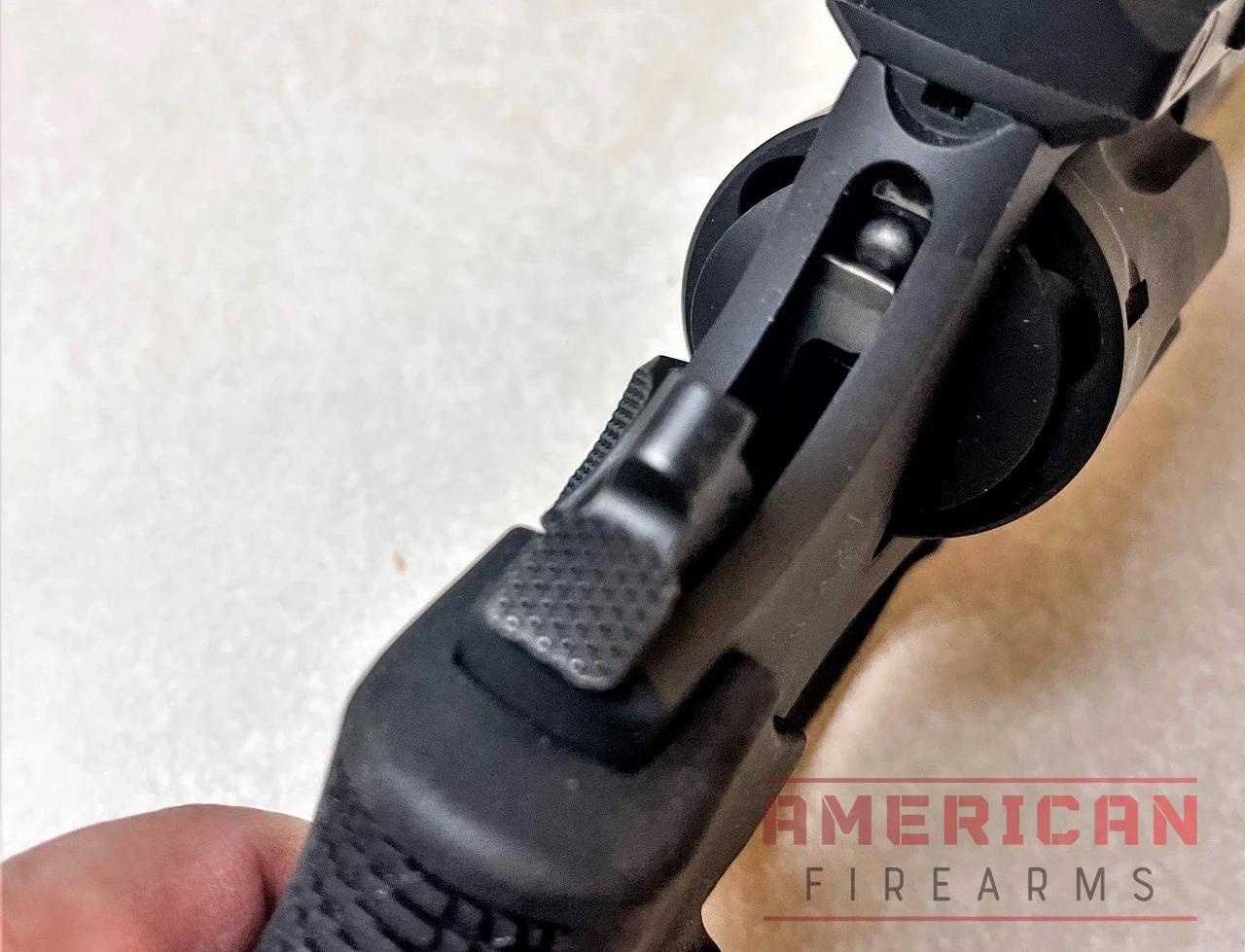
Beyond sights, there are a few smart features included with the 856 — specifically a full-length ejector rod (most 3-inch revolvers inherit the shorter ejector rod of 2-inch models). The hammer spur is short with rounded corners, and while I would generally opt for no spur on a carry revolver, this one is certainly designed with carry in mind.
The rest of the Defender is pretty standard, and I don’t mean that as a knock against it. For a CCW-type handgun perhaps simplicity is a bonus.
Fit & Finish
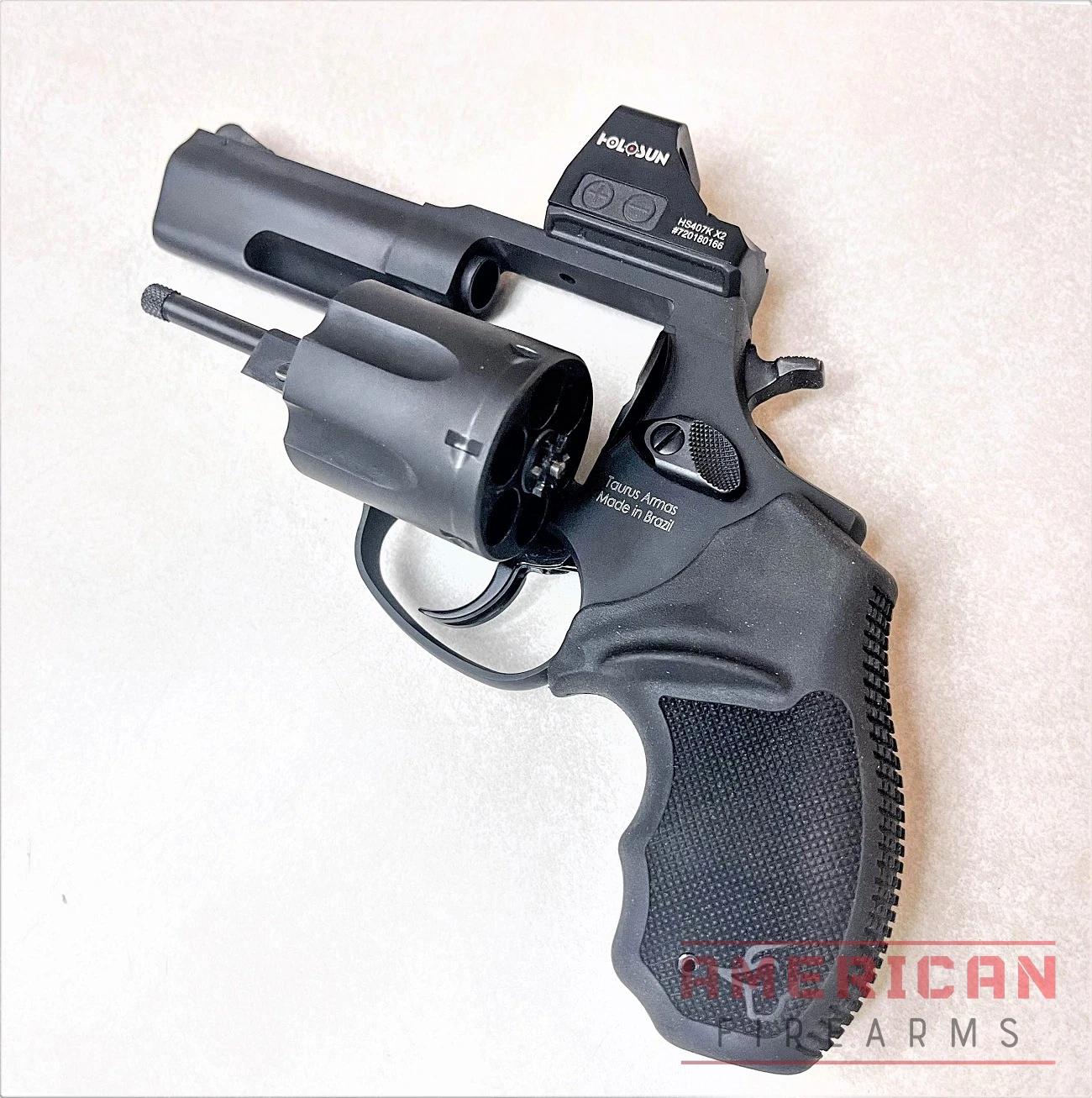
I must say that I was very pleased with the appearance of the Defender when I first opened the box. The handsome matte black finish is sexy in my opinion, and the clean laser engraving and the overall appearance of everything just look sharp.
But all the good looks in the world won’t do you any good if it doesn’t work. It appears that Taurus has taken care to not only make it look good but also to ensure everything fits properly ensuring proper function.
I will say that while the finish looks good, it’s not the most durable and is one area where Taurus likely cut a few corners. It looks thin in spots and some of the sharper corners are bare. Not something you’d find on higher-end revolvers.
Reliability
One of the revolvers’ strong points, or at least one that is frequently shared, is simple reliability. As long as the trigger function works, and the cylinder timing and turning matches, it’s hard for anything else to go wrong.
During the hundreds of rounds fired I experienced no malfunctions, which is good news. But a couple of hundred rounds isn’t exactly a heavy course of fire. I would love to continue shooting the Defender to see how it holds up over time, follow me if you’d like to hear more about this development.
In terms of speed loader compatibility, shorter reloaders like the Colt D-Frame and S&W K-Frame reloaders work well with it, but longer reloaders may struggle with the lack of room between the frame and cylinder, so your mileage may vary.
Overall, shooting the 856 TORO was a much better experience this time around, and it’s clear they’ve made lots of headway toward becoming a real contender in the revolver space.
Are they on part with the Colts and Kimbers of the world? No. But they don’t demand the same prices, either.
Value
With a street price of $350.00, it is a very easy pistol to get a hold of. Compared to American-made revolvers like the Ruger LCR the Smith & Wesson 642 or the Colt Night Cobra the Defender is very affordable. This is partially in part due to the reputations of those names, but I’d like to think that this little Taurus is working on building up a reputation of its own.
856 TORO vs The Competition
How It Stacks Up
The carry revolver market isn’t exactly crowded these days, but the options that remain are legitimate. When I started testing the 856 TORO, I couldn’t help but think about the other wheelguns I’ve carried over the years and how this Taurus stacks up against what else you could spend your money on. Let’s talk about the real competition.
The Field: What You’re Actually Cross-Shopping
If you’re seriously considering the 856 TORO, you’re probably also looking at a handful of other snubbies and compact revolvers.
The usual suspects include the Ruger LCR, the Ruger SP101, Smith & Wesson’s 642 and the newer Bodyguard 2.0, the Colt Cobra, and if you’re willing to spend more, the Kimber K6S. Each brings something different to the table, and none of them come optics-ready from the factory—which is already a point in Taurus’s favor if red dots are your thing.
Here’s how they compare on paper:
| Model | Caliber | Capacity | Barrel | Weight (Empty) | Optic Ready? | Street Price |
|---|---|---|---|---|---|---|
Taurus 856 TORO | .38 Spl +P | 6 | 3" | 23.5 oz | Yes (K-footprint) | $350-$400 |
Ruger LCR | .38 Spl +P | 5 | 1.87" | 13.5 oz | No | $550-$600 |
Ruger SP101 | .357 Mag | 5 | 3" | 27 oz | No | $700-$750 |
S&W 642 | .38 Spl +P | 5 | 1.87" | 15 oz | No | $500-$550 |
S&W Bodyguard 2.0 | .38 Spl +P | 5 | 1.87" | 14.2 oz | No | $400-$450 |
Colt Cobra | .38 Spl +P | 6 | 2" | 25 oz | No | $700-$800 |
Kimber K6S | .357 Mag | 6 | 3" | 25.1 oz | No | $900-$1000 |
Right off the bat, a few things jump out. The 856 TORO is the least expensive gun on this list, sometimes by a significant margin. It’s the only one that comes optics-ready. And it holds six rounds instead of five, matching only the Colt Cobra and Kimber K6S in capacity—both of which cost roughly double.
Ruger LCR: The Lightweight Champion
The LCR is what I’d call the 856 TORO’s philosophical opposite. Where the Taurus went with a steel frame, 3-inch barrel, and optic mount, the LCR commits fully to being a deep-concealment pocket gun. At 13.5 ounces, it’s nearly 10 ounces lighter than the 856 TORO, and that 1.87-inch barrel disappears in pockets and ankle holsters where the Taurus simply won’t fit.
The LCR’s trigger is legitimately excellent—smooth, predictable, and one of the best factory DAO triggers I’ve ever used on a revolver. Ruger’s Hogue Tamer grips do a remarkable job of taming the snappy recoil you’d expect from such a light gun. The polymer-and-aluminum frame construction means it won’t rust if you’re carrying it in humid environments or sweating all over it during summer carry.
When to choose the LCR: If deep concealment is your priority and you’re willing to sacrifice a round and a red dot for serious weight savings, the LCR makes sense. It’s the gun for pocket carry, ankle carry, or minimalist IWB setups where even the 856 TORO feels too big. The trade-off is less shootability—that light weight means more felt recoil and a shorter sight radius that makes precision harder past 10 yards.
When to choose the 856 TORO: If you’re carrying on a belt (IWB or OWB) and want better shootability, the extra round, and especially if you want a red dot, the 856 TORO is the better choice. That 3-inch barrel and additional weight make it notably easier to shoot well, and the optic is a game-changer for older eyes or anyone who struggles with traditional revolver sights.
Ruger SP101: The Stainless Tank
The SP101 is what happens when Ruger decides to build a small revolver like it’s meant to survive nuclear war. It’s all stainless steel, built like an absolute tank, and chambered in .357 Magnum. At 27 ounces, it’s actually heavier than the 856 TORO, even without an optic mounted.
The SP101 shares the 856 TORO’s 3-inch barrel option, which means similar velocity and shootability. The trigger is good but not great—functional, predictable, but with more stacking than the LCR and a heavier pull than I’d prefer.
Where the SP101 really shines is in the .357 Magnum chambering. If you’re carrying in bear country or want maximum power from a compact package, that magnum capability matters. The 856 TORO is .38 Special +P only, which is perfectly adequate for two-legged threats but doesn’t give you the same flexibility.
When to choose the SP101: If you need .357 Magnum capability, want the most durable carry revolver money can buy, or just prefer Ruger’s reputation for quality control over Taurus’s improving-but-still-questionable track record. The SP101 costs nearly double the 856 TORO, but you’re getting a gun that will outlive you.
When to choose the 856 TORO: If you don’t need magnum power, want that sixth round, or—again—if the optic-ready capability is important to you. The price difference is substantial, and for defensive use with .38 Special loads, the performance difference isn’t as dramatic as the cost difference suggests. Plus, the optic mount is something the SP101 simply can’t offer without custom work.
Smith & Wesson 642 & Bodyguard 2.0: The J-Frame Standards
Smith & Wesson’s J-frame snubbies have been the gold standard for carry revolvers for generations. The 642, with its aluminum frame and shrouded hammer, is the classic modern defensive revolver that probably still outsells everything else combined. The newer Bodyguard 2.0 attempts to modernize the formula with improved sights, better grips, and a more refined trigger.
Both are five-shot guns with roughly 2-inch barrels, making them significantly more compact than the 856 TORO. The 642 weighs about 15 ounces, the Bodyguard 2.0 comes in at 14.2 ounces. They’re pocket-friendly in a way the 856 TORO simply isn’t. The triggers are acceptable—typical DAO revolver pulls in the 10-12 pound range—but neither approaches the refined feel of the LCR.
What you’re really buying with Smith & Wesson is the name and the aftermarket support. Holsters exist for every conceivable carry method. Grips are available from a dozen manufacturers. Every gunsmith in America can work on a J-frame with their eyes closed. That ecosystem matters when you’re planning to carry a gun every day.
When to choose the 642/Bodyguard 2.0: If you want a true pocket gun from a company with bulletproof customer service and more aftermarket support than any other revolver platform. If the Smith & Wesson name gives you confidence Taurus can’t match. If you prioritize proven reliability over capacity or modern features.
When to choose the 856 TORO: If you’re carrying on your belt rather than in a pocket, want that sixth round, and value the optic mount over the J-frame’s extensive aftermarket ecosystem. The 856 TORO is also cheaper than the 642, which isn’t something I expected to say about any gun compared to a Smith & Wesson. The Bodyguard 2.0 at $437 MSRP is closer in price, but you’re still not getting an optic mount or that sixth round.
Colt Cobra: The Premium Nostalgia Play
The Cobra represents Colt’s return to the double-action revolver market after a long hiatus. It’s a six-shot .38 Special like the 856 TORO, with a 2-inch barrel and all-steel construction. The fit and finish are noticeably nicer than the Taurus—this is a gun that feels expensive when you handle it. The trigger is quite good, the frame has that classic Colt D-frame geometry that some shooters swear points more naturally, and you’re buying into the Colt name with all the heritage that implies.
At $700-$800, you’re paying double what the 856 TORO costs, and for that money you’re getting… a shorter barrel, no optic mount, and the satisfaction of owning a Colt. That’s it. The capacity matches. The weight is similar. You lose the ability to mount a red dot, and you’re getting an inch less barrel length.
When to choose the Colt Cobra: If you value craftsmanship over features, want the cachet of the Colt name, or just prefer the feel of the D-frame geometry. If you’re a collector as much as a shooter and want something with more heritage. If money isn’t a primary concern.
When to choose the 856 TORO: If you’re looking for maximum features and value per dollar. If you want that 3-inch barrel for better velocity and sight radius. If the optic mount matters at all. Honestly, the Cobra is a beautiful gun, but it’s hard to justify spending twice as much for fewer practical features unless you just really want that pony rollmark.
Kimber K6S: The Premium Alternative
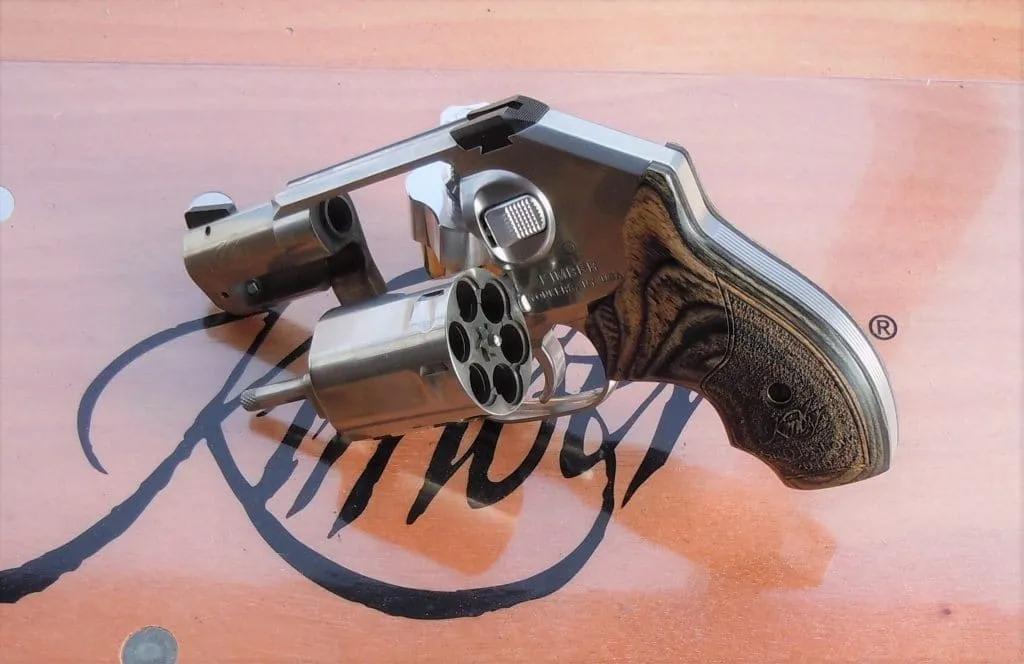
The K6S is what happens when Kimber decides to build a carry revolver with no compromises. It’s a six-shot gun, available in both .38 Special and .357 Magnum, with the 3-inch barrel variant matching the 856 TORO’s dimensions almost exactly. The build quality is exceptional, the trigger is excellent, and everything about it screams “premium.”
At $900-$1,000 street price, it’s more than double the 856 TORO’s cost. You’re getting better fit and finish, tighter tolerances, and Kimber’s reputation for quality. The K6S also offers .357 Magnum chambering if you want it, giving you more flexibility than the .38 Special-only Taurus.
When to choose the K6S: If you want the absolute best six-shot carry revolver money can buy and price isn’t a concern. If the .357 Magnum chambering matters to you. If you value premium materials and craftsmanship over price considerations.
When to choose the 856 TORO: If you can’t justify spending $1,000 on a carry revolver when a $400 option will do the job. If you want an optic mount, which the K6S doesn’t offer. If you’re practical about gear and recognize that for defensive use, the Taurus will perform the same job for less than half the money.
The Optic-Ready Factor: The Real Differentiator
Here’s what makes this comparison interesting: remove the optic-ready capability from the 856 TORO, and it becomes just another budget carry revolver competing against better-established brands. Add that TORO plate back in, and suddenly it’s the only game in town for anyone who wants a factory-supported red dot on their carry wheelgun.
None of these competitors offer optic mounting from the factory. If you want a red dot on a Ruger, Smith, Colt, or Kimber, you’re looking at custom gunsmith work that’ll cost as much as the 856 TORO itself. And even then, the smith is jerry-rigging a solution that wasn’t designed into the gun from the start. The Taurus gives you a mounting plate, the hardware, and the peace of mind that comes with a factory-supported solution.
For anyone who’s struggled with traditional revolver sights—whether due to aging eyes, astigmatism, or just preference for red dots—that capability alone justifies the 856 TORO’s existence.
The Real Question: What’s Your Priority?
After shooting all these guns over the years, here’s how I’d break down the decision:
Choose the 856 TORO if:
- You want an optic-ready carry revolver and aren’t interested in custom gunsmithing
- You’re carrying on a belt (IWB or OWB) and can accommodate the size
- You value capacity and want six rounds instead of five
- You want the longest barrel and best velocity in this class
- You’re budget-conscious and want maximum features per dollar
- You’re okay with Taurus’s improving but still imperfect quality control reputation
Choose something else if:
- Deep concealment is your absolute priority (LCR or 642)
- You need .357 Magnum capability (SP101 or K6S)
- You value premium craftsmanship over features (Colt Cobra or K6S)
- You want the most established aftermarket support (642/Bodyguard)
- You need the lightest possible gun (LCR or Bodyguard 2.0)
- You don’t care about red dots and just want a proven platform
The Bottom Line on Competition
The 856 TORO isn’t trying to be the best carry revolver across every metric. It’s trying to be the best value carry revolver with modern features. And in that specific niche, it succeeds remarkably well. You’re getting six shots, a 3-inch barrel, a factory-supported optic mount, and acceptable quality control for less than any legitimate competitor charges.
Are there better-made revolvers? Absolutely. The Rugers, Smiths, Colts, and Kimbers all have tighter tolerances and more refined triggers. But they also cost 50-150% more and don’t offer the optic-ready capability that makes the 856 TORO interesting in the first place.
The real genius of the 856 TORO is recognizing that most people don’t need a $1,000 Kimber to carry defensively. They need something reliable, shootable, and affordable with modern features. Taurus built exactly that gun, priced it aggressively, and created a product category where they’re currently the only player.
That’s a pretty strong position to be in, even if the competition is objectively nicer in some ways.
FAQs
How durable is Taurus 856?
Is the Taurus 856 good for self-defense?
What ammo can a Taurus 856 shoot?
Meet the Experts
Written By
Coldboremiracle
Precision Rifle Expert
- Licensed Concealed Carry Holder
- Lifelong Hunter

Edited By
Michael Crites
Licensed Concealed Carry Holder
- Founder of AmericanFirearms.org
- Licensed Concealed Carry Holder
Hands-On Product Reviews
Further Reading

Updated
December 28, 2025 — Added historical context explaining the evolution of carry revolvers and why optics-ready matters, comprehensive competitive analysis with a comparison table covering LCR, SP101, 642, Cobra, and K6S, and detailed testing methodology.
Our Top Picks
Taurus 856 TORO